Curious About the BeechBand? Give one a try with HAPT!
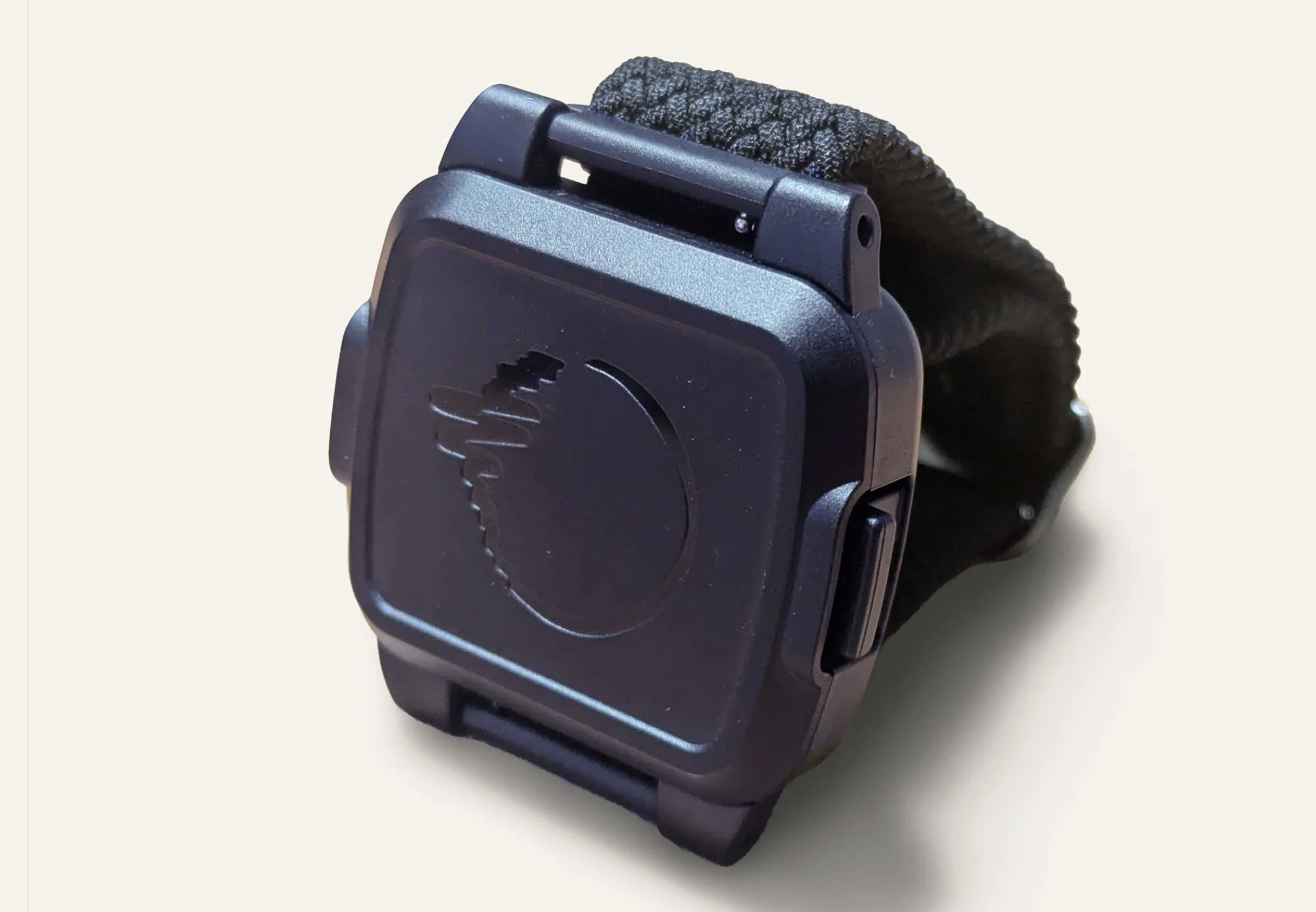
When I attended the World Parkinson Congress this past May, one of the devices that caught my attention was the BeechBand. You may have seen BeechBands online, heard about them in one of your Parkinson’s support groups, or maybe you’ve even tried one yourself. Fortunately, I had the chance to connect with the BeechBand team while I was at the Congress, and they graciously offered to set us up with trial units so our patients could experience them for themselves.
So, what exactly is a BeechBand, and why is everyone talking about it? Let’s get into it.
What Is a BeechBand?
The BeechBand is a small wearable device that provides continuous, gentle mechanical vibration, described by the company as “subconscious vibrotactile stimulation.” Unlike a smartwatch or other connected wearable, the BeechBand does not use Wi-Fi, Bluetooth connectivity, or magnets. The vibration itself is mechanical rather than electrical.
BeechBand’s explanation is that the rhythmic vibration provides a calming sensory signal to the nervous system, and that this could potentially affect movement, anxiety, and other symptoms. The device actually grew out of founder Carl Beech’s experience using a rhythmic tapping technique for his own Parkinson’s symptoms; the wearable was developed as a way of providing that rhythmic input continuously without the person having to consciously perform the tapping.
What can it Help With?
This is one of the big questions — and right now, there isn’t enough research to predict exactly who will respond to the BeechBand or what changes an individual person might experience. Based on feedback BeechBand has collected from people using the device, some of the most commonly reported changes have been in:
Tremor
Anxiety
Speech
Swallowing
Balance and walking
Freezing of gait
Sleep
For our patients with Parkinson’s, we’re particularly interested in whether the BeechBand might make a noticeable difference in things like tremor, freezing, walking and balance, sleep, or anxiety that may be affecting movement and everyday activities.
The important thing to remember is that everyone responds differently. Some people report noticeable changes, while others may notice little or no benefit. That’s exactly why we like the idea of a trial — it gives you the opportunity to find out whether the BeechBand makes a meaningful difference for you.
What Does BeechBand's Data Show?
While formal clinical research is still needed, BeechBand has collected feedback from people who have used the device, and the results are certainly interesting.
According to BeechBand's customer surveys, approximately 75–80% of respondents have reported noticing some type of positive change. About 25% report noticing a change very quickly, while for many others it may take several weeks of consistent use.
BeechBand has also reported higher rates of perceived benefit among people who use the device consistently. In information shared with our team, approximately 85% of respondents who wore the BeechBand for more than 8 hours per day for at least 8 weeks reported a benefit.
Those numbers sound promising, but they need to be interpreted appropriately. These are self-reported customer experiences, not the results of a randomized or controlled clinical trial. They do not yet know exactly who is most likely to respond, which symptoms are most likely to improve, or how much of a change someone might experience.
How Long Does it Take to Work?
Some BeechBand users report noticing a difference very quickly, but for many people, changes are much more gradual. BeechBand currently recommends wearing the device consistently for about 8 hours per day and giving it up to 12 weeks before deciding whether it is making a meaningful difference.
That’s one of the reasons we wanted to offer an extended trial to our patients. We want you to have enough time to incorporate the BeechBand into your normal routine and pay attention to whether anything actually changes — whether that's your walking, freezing, tremor, balance, sleep, anxiety, or another symptom we're monitoring together.
And if you try it consistently and don't notice a difference? That's important information too. The BeechBand doesn't work for everyone, and our goal is to help you determine whether it is useful for you BEFORE you go and purchase one.
Who Can Safely Use a BeechBand?
The BeechBand trial is available to established Healthy Aging Physical Therapy patients when the patient and treating clinician determine that a trial may be appropriate.
Because this is an emerging device, safety comes first.
For our trial program, patients with epilepsy or a seizure disorder will not participate. Patients with a pacemaker or Deep Brain Stimulation (DBS) will need approval from their medical provider before beginning a trial.
The manufacturer also reports that a small percentage of users have experienced temporary nausea or dizziness when first using the device. Patients participating through HAPT should let their therapist know about any new or worsening symptoms while using the band.
How the HAPT BeechBand Trial Works
Since we only have a limited number of BeechBands available, patients participating in the trial program will complete a lending agreement and waiver and provide a $100 refundable deposit. Your deposit will be returned when the BeechBand is returned to Healthy Aging Physical Therapy.
We recommend giving the BeechBand at least one month of consistent use before deciding whether it’s making a difference. Patients are welcome to continue their trial for up to 12 weeks, or until they are discharged from therapy, whichever comes first.
We want you to have enough time to incorporate the BeechBand into your daily routine and determine whether it provides a meaningful benefit for you.
Interested in Trying One?
If you’re currently working with Healthy Aging Physical Therapy and think a BeechBand might be worth exploring, ask your PT or OT about our BeechBand Trial Program.
Your therapist can help determine whether you may be an appropriate candidate, identify what symptoms or functional changes would be useful to monitor, and help you evaluate whether you are experiencing a meaningful difference.
Not currently a HAPT patient?
Healthy Aging Physical Therapy provides specialized in-home physical and occupational therapy for older adults and people living with Parkinson’s disease, balance and gait disorders, vestibular conditions, and other complex neurologic and medical conditions.
If you’re interested in working with our team, please reach out!
Disclaimer: The BeechBand is an emerging device and is not a substitute for medical care or evidence-based rehabilitation. Healthy Aging Physical Therapy does not guarantee that use of the BeechBand will improve any symptom or medical condition. Reported benefits discussed above are based primarily on anecdotal reports and manufacturer-collected user feedback rather than published clinical research.
Healthy Aging Physical Therapy has no financial relationship with BeechBand and receives no compensation, commission, referral fee, or other financial benefit from the sale of BeechBands. We are making a limited number of trial devices available solely as a courtesy to our patients so they can determine for themselves whether the device provides a meaningful benefit.
Participation in the HAPT trial program is subject to clinical screening, device availability, and applicable safety requirements.