By: Becca Corbett, MS, OTR/L

Have you ever had a long list of things to accomplish, only to feel completely exhausted after completing just one task?
Maybe getting dressed in the morning leaves you needing a break before breakfast. Perhaps preparing a meal, taking a shower, or doing laundry requires more effort than it once did.
As we age, changes in strength, endurance, and overall health can make familiar activities feel more physically demanding. For some individuals, fatigue may be associated with decreased activity tolerance, which refers to a reduced ability to perform everyday activities due to fatigue, weakness, shortness of breath, or other physical limitations.
Decreased activity tolerance can be associated with conditions such as heart or lung disease, anemia, physical deconditioning, and other medical conditions. New, persistent, or worsening fatigue should be discussed with a healthcare provider rather than simply attributed to aging.
But here's something important to remember: Needing to modify how you complete an activity doesn't mean you're giving up your independence.
Energy conservation is about working smarter, not harder. By making small adjustments to your daily routine, you can better manage fatigue, reduce unnecessary physical strain, and save energy for the activities that matter most.
Energy Conservation Isn't Giving Up
When people hear the term energy conservation, they may assume it means doing less, avoiding activities, or relying more heavily on others.
However, energy conservation is not about giving up the things you enjoy. It's about finding different ways to accomplish them.
Think of your energy like a battery. Every activity throughout the day uses some of that energy, whether it's getting dressed, preparing breakfast, attending an appointment, or spending time with family.
Some activities require more energy than others, and your energy levels may fluctuate throughout the day.
If you use most of your energy completing household chores in the morning, you may have very little left for an afternoon walk, visiting friends, or participating in a favorite hobby.
This is where energy conservation becomes valuable.
By planning ahead, adjusting how you complete activities, and incorporating appropriate rest breaks, you can use your available energy more effectively.
The goal isn't to eliminate activity. It's to create a balance between activity and rest that allows you to continue participating in meaningful everyday routines.
The 4 P's of Energy Conservation
One helpful way to remember energy conservation strategies is through the 4 P's: Prioritize, Plan, Pace, and Position.
These simple techniques can help reduce unnecessary physical effort and make everyday activities more manageable.
1. Prioritize: Focus on What Matters Most
We all have days when our to-do lists seem never-ending. However, not everything needs to be accomplished at once!
Prioritizing involves identifying which activities are most important and directing your energy toward those tasks first.
Consider the following strategies:
Identify which activities need to be completed today and which can wait.
Focus on essential tasks before less important chores.
Ask family members, friends, or caregivers for assistance when appropriate.
Save energy for meaningful activities, such as spending time with loved ones or participating in hobbies.
Everyday example: You have a doctor's appointment in the afternoon, but your bathroom also needs cleaning. Rather than exhausting yourself cleaning before your appointment, prioritize getting ready for your appointment and save the cleaning for another day.
Remember, asking for help or postponing a task doesn't mean losing independence. Sometimes, it means making a thoughtful decision about where to spend your energy.
2. Plan: Think Ahead to Save Energy
A little planning can go a long way toward preventing unnecessary fatigue!
Planning involves organizing activities ahead of time to reduce extra trips, movements, and physical exertion.
Helpful strategies include:
Gather all necessary supplies and equipment before beginning an activity.
Keep frequently used items within easy reach.
Alternate physically demanding activities with lighter tasks.
Spread household chores throughout the week rather than completing everything in one day.
Consider using a calendar to organize appointments, responsibilities, and planned rest periods.
Everyday example: Before preparing a meal, gather your ingredients, cooking utensils, and dishes in one area. This can help reduce repeated trips between the refrigerator, cabinets, and countertops.
Planning activities during times of the day when you typically have the most energy may also help make daily routines more manageable.
3. Pace: Slow and Steady Wins the Race!
Have you ever rushed through a task because you wanted to get it over with, only to feel completely exhausted afterward?
Pacing involves balancing activity and rest to prevent excessive fatigue and overexertion.
One of the most important principles of pacing is learning to rest before you become exhausted, rather than waiting until your body has reached its limit.
Consider these strategies:
Maintain a slow, steady pace rather than rushing through activities.
Take frequent, planned rest breaks.
Break larger activities into smaller, manageable steps.
Alternate periods of activity with appropriate rest.
Avoid holding your breath during physically demanding tasks.
One helpful breathing strategy for some individuals experiencing breathlessness is pursed-lip breathing.
To practice, breathe in slowly through your nose for approximately two counts, as though you're smelling a flower. Then gently purse your lips, as though you're blowing out a birthday candle, and breathe out slowly for approximately four counts.
Avoid forcing your breath or rushing through the technique.
Everyday example: Instead of standing for 30 minutes to prepare an entire meal, consider taking seated breaks between preparing ingredients, cooking, and cleaning up.
Remember, the goal isn't to complete activities as quickly as possible. It's to complete them safely and efficiently without becoming unnecessarily exhausted.
4. Position: Make Your Environment Work for You
Did you know that the way you position your body during an activity can influence how much energy you use?
Frequent bending, reaching, twisting, and prolonged standing can increase physical effort and contribute to fatigue.
Small adjustments to your body positioning and environment can make everyday activities easier.
Sit during activities such as grooming, dressing, meal preparation, or folding laundry when appropriate.
Maintain a comfortable, supported, upright posture to allow for easier breathing.
Keep frequently used items within easy reach.
Avoid unnecessary bending, twisting, and overhead reaching.
Consider adaptive equipment such as a reacher, sock aid, or long-handled shoehorn.
Use a shower chair or tub bench when appropriate to reduce the physical demands of bathing.
Everyday example: Instead of standing while folding laundry, sit in a supportive chair and complete the task at a comfortable height.
Sitting can reduce the physical demands of many activities by decreasing the effort required to maintain a standing position.
And remember, it's okay to sit while showering, getting dressed, or preparing meals! Making an activity easier doesn't make it any less meaningful.
Understanding Your Body's Limits: The Rate of Perceived Exertion (RPE) Scale
Now that we've discussed ways to conserve energy, how do you know when your body is working too hard?
One helpful tool is the Rating of Perceived Exertion (RPE) scale.
According to Cleveland Clinic, RPE is a subjective measure of how hard your body feels it is working during physical activity.
In other words, it's your personal rating of how much effort an activity requires.
When determining your RPE, consider:
How quickly or heavily you're breathing.
How fast your heart feels like it's beating.
How tired your muscles feel.
How much you're sweating.
Your overall level of physical effort.
What Is the Modified Borg RPE Scale?
The modified Borg CR10 scale uses numbers ranging from 0 to 10 to describe perceived exertion, with 0 representing no exertion and 10 representing maximum effort.
RPE Rating
Perceived Exertion
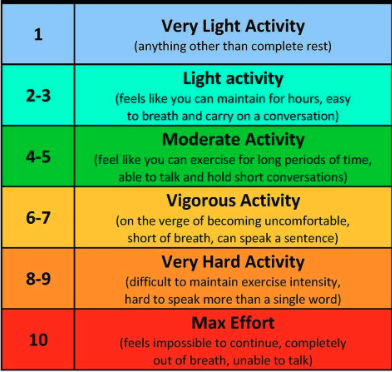
Source: Cleveland Clinic, Rated Perceived Exertion (RPE) Scale (2023).
How Can RPE Help You Conserve Energy?
RPE encourages you to pay attention to how your body responds to activity rather than simply pushing through until a task is finished.
For example, imagine you're doing laundry.
While folding clothes in a seated position, you might rate your effort as a 2 out of 10. However, when standing and putting clothes away, you may notice your effort increases to a 6 out of 10.
Recognizing this change can help you determine when to take a break, slow down, or modify how you're completing the activity.
The RPE scale can be particularly helpful for older adults experiencing reduced endurance, fatigue, or difficulty completing daily activities.
However, everyone experiences exertion differently. There is no single RPE rating that is appropriate for everyone, and your healthcare provider or therapist can help determine appropriate activity levels based on your individual needs.
Recognizing the Signs of Overexertion
Learning to recognize your body's limits is an important part of managing fatigue.
Signs that an activity may be becoming too physically demanding include:
Increased shortness of breath.
Excessive muscle fatigue or weakness.
Unusual sweating.
Difficulty maintaining proper posture.
Feeling unusually exhausted during or after an activity.
Difficulty recovering after physical exertion.
If you notice increasing fatigue or breathing effort, slow down, take a rest break, and consider modifying the activity.
Important: Dizziness, faintness, chest pain, or sudden or severe shortness of breath should not be treated as ordinary fatigue. Stop the activity and seek medical evaluation. Chest pain, fainting, or severe difficulty breathing may require emergency medical attention.
Finding the Balance Between Activity and Rest
One common misconception about energy conservation is that resting more automatically means doing better.
However, avoiding activity altogether can contribute to physical deconditioning, reduced strength, and decreased endurance over time.
The key is finding an appropriate balance.
Energy conservation strategies can be used alongside individualized physical activity and exercise programs to help individuals remain active without consistently pushing themselves to exhaustion.
For example, choosing to sit while preparing dinner may allow you to preserve enough energy to enjoy an evening walk or spend time with family.
Similarly, spreading household chores throughout the week may make it easier to participate in a favorite hobby without feeling completely drained.
Rather than focusing only on how much you accomplish in a day, consider asking yourself:
"Am I using my energy in a way that allows me to participate in the activities that matter most to me?"
This simple change in perspective can help shift the focus from completing every task to maintaining a meaningful and balanced daily routine.
How Can Occupational Therapy Help?
Occupational therapy plays an important role in helping older adults manage fatigue, improve activity tolerance, and maintain independence with meaningful daily activities.
Occupational therapists focus on helping individuals participate in the activities they need and want to do, whether that's getting dressed, preparing a favorite meal, completing household chores, or spending time with loved ones.
An individualized occupational therapy program may include:
Energy conservation education: Teaching strategies such as the 4 P's to reduce unnecessary physical effort during daily activities.
Activity pacing and self-monitoring: Helping individuals recognize fatigue, monitor perceived exertion, and incorporate appropriate rest breaks.
Adaptive equipment recommendations: Introducing tools such as reachers, sock aids, and shower chairs to make everyday activities safer and more manageable.
Environmental modifications: Recommending changes to the home environment to reduce unnecessary bending, reaching, and physical exertion.
Functional activity tolerance training: Using individualized, graded activities to support endurance and participation in daily routines.
Patient and caregiver education: Providing strategies to support safety, independence, and carryover into everyday life.
Energy conservation is not a one-size-fits-all approach. Occupational therapists consider each individual's abilities, medical history, daily routines, and personal goals when recommending strategies.
By making thoughtful modifications to everyday activities, occupational therapy can help older adults manage fatigue while continuing to engage in meaningful occupations.
Small Changes Can Make a Big Difference
Energy conservation isn't about giving up. It's about finding ways to keep doing what matters most.
Whether it's sitting while preparing dinner, spreading household chores throughout the week, taking planned rest breaks, or using the RPE scale to recognize when your body needs a break, small changes can make a meaningful difference.
Remember, independence doesn't always mean doing everything yourself or completing activities the same way you always have.
Sometimes, maintaining independence means learning new strategies, accepting assistance when appropriate, and making adjustments that allow you to continue participating in everyday life.
References and Additional Resources
Spondylitis Association of America. (2026). Energy Conservation Isn't Giving Up: Managing Fatigue in Spondyloarthritis. Spondycast, featuring Janet Poole, PhD, OTR/L.
Cleveland Clinic. (2023). Rated Perceived Exertion (RPE) Scale.
https://my.clevelandclinic.org/health/articles/17450-rated-perceived-exertion-rpe-scale
Energy Conservation, Minimum Steps, and Adaptations When Needed: A Scoping Review. (2022). Hong Kong Journal of Occupational Therapy.