Healthy Aging Physical Therapy Monthly Blog
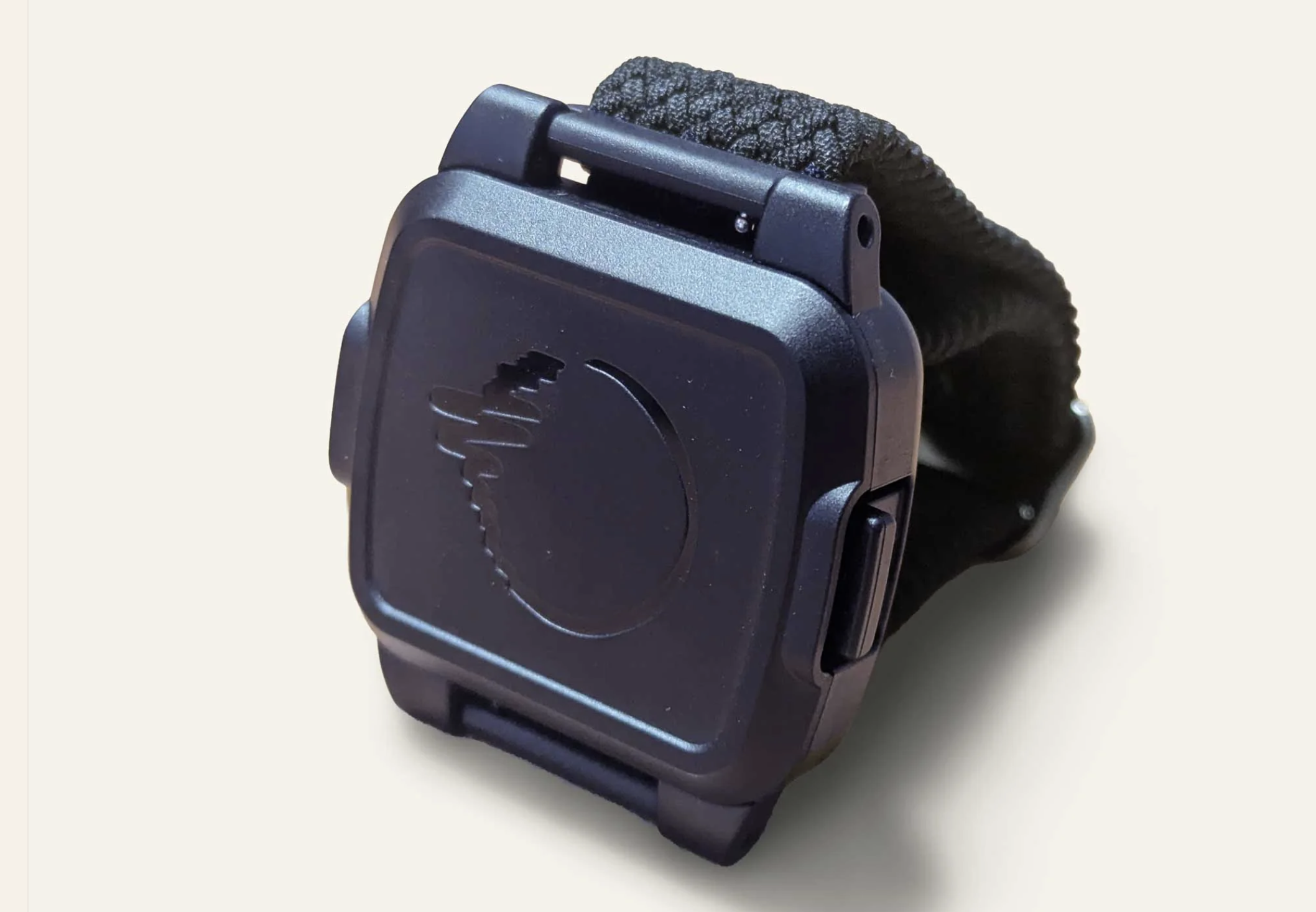
Curious About the BeechBand? Give one a try with HAPT!
Curious about the BeechBand for Parkinson’s? Learn how it works, what users report, and how Healthy Aging Physical Therapy patients can trial a BeechBand before deciding if it’s right for them.
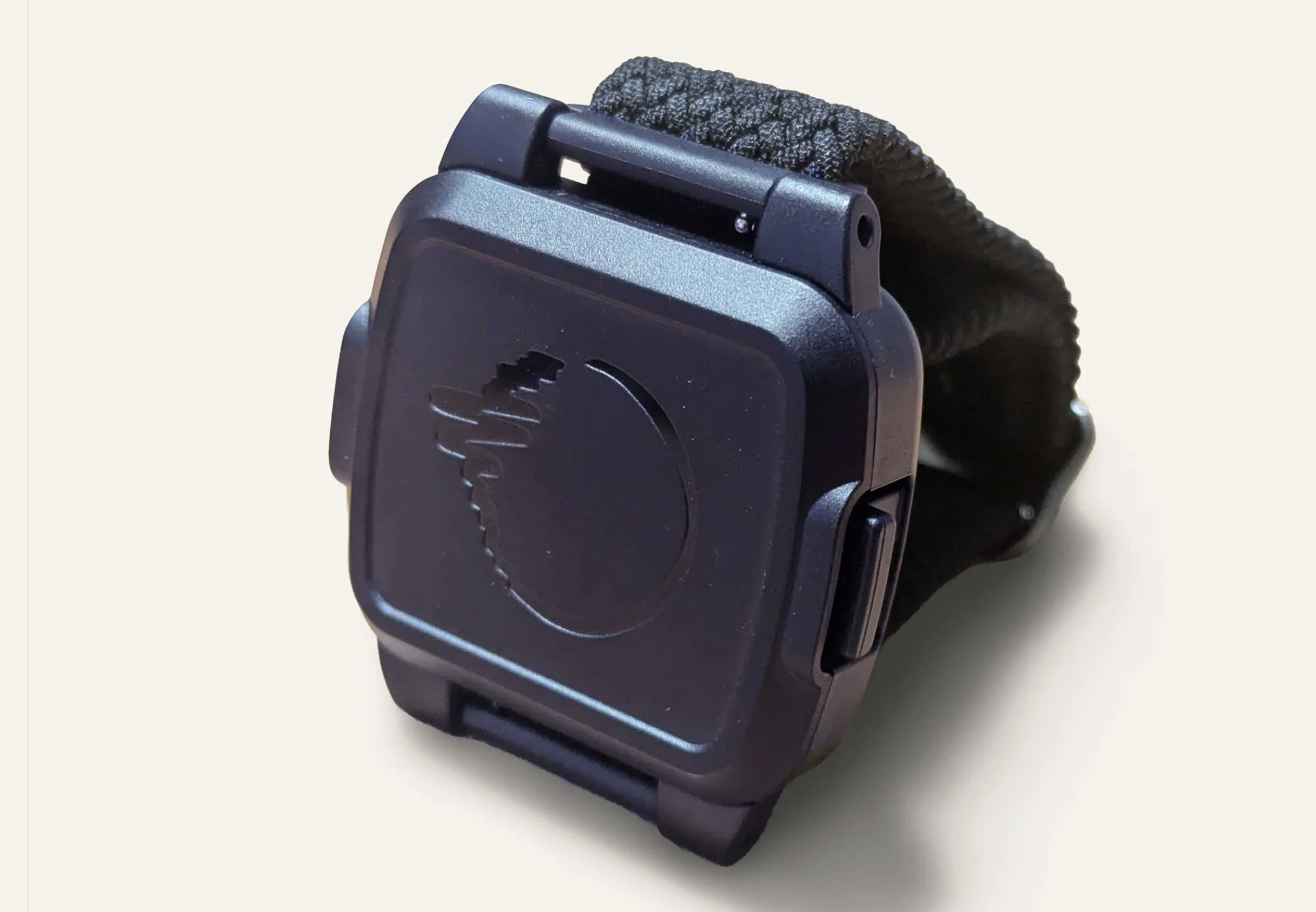
When I attended the World Parkinson Congress this past May, one of the devices that caught my attention was the BeechBand. You may have seen BeechBands online, heard about them in one of your Parkinson’s support groups, or maybe you’ve even tried one yourself. Fortunately, I had the chance to connect with the BeechBand team while I was at the Congress, and they graciously offered to set us up with trial units so our patients could experience them for themselves.
So, what exactly is a BeechBand, and why is everyone talking about it? Let’s get into it.
What Is a BeechBand?
The BeechBand is a small wearable device that provides continuous, gentle mechanical vibration, described by the company as “subconscious vibrotactile stimulation.” Unlike a smartwatch or other connected wearable, the BeechBand does not use Wi-Fi, Bluetooth connectivity, or magnets. The vibration itself is mechanical rather than electrical.
BeechBand’s explanation is that the rhythmic vibration provides a calming sensory signal to the nervous system, and that this could potentially affect movement, anxiety, and other symptoms. The device actually grew out of founder Carl Beech’s experience using a rhythmic tapping technique for his own Parkinson’s symptoms; the wearable was developed as a way of providing that rhythmic input continuously without the person having to consciously perform the tapping.
What can it Help With?
This is one of the big questions — and right now, there isn’t enough research to predict exactly who will respond to the BeechBand or what changes an individual person might experience. Based on feedback BeechBand has collected from people using the device, some of the most commonly reported changes have been in:
Tremor
Anxiety
Speech
Swallowing
Balance and walking
Freezing of gait
Sleep
For our patients with Parkinson’s, we’re particularly interested in whether the BeechBand might make a noticeable difference in things like tremor, freezing, walking and balance, sleep, or anxiety that may be affecting movement and everyday activities.
The important thing to remember is that everyone responds differently. Some people report noticeable changes, while others may notice little or no benefit. That’s exactly why we like the idea of a trial — it gives you the opportunity to find out whether the BeechBand makes a meaningful difference for you.
What Does BeechBand's Data Show?
While formal clinical research is still needed, BeechBand has collected feedback from people who have used the device, and the results are certainly interesting.
According to BeechBand's customer surveys, approximately 75–80% of respondents have reported noticing some type of positive change. About 25% report noticing a change very quickly, while for many others it may take several weeks of consistent use.
BeechBand has also reported higher rates of perceived benefit among people who use the device consistently. In information shared with our team, approximately 85% of respondents who wore the BeechBand for more than 8 hours per day for at least 8 weeks reported a benefit.
Those numbers sound promising, but they need to be interpreted appropriately. These are self-reported customer experiences, not the results of a randomized or controlled clinical trial. They do not yet know exactly who is most likely to respond, which symptoms are most likely to improve, or how much of a change someone might experience.
How Long Does it Take to Work?
Some BeechBand users report noticing a difference very quickly, but for many people, changes are much more gradual. BeechBand currently recommends wearing the device consistently for about 8 hours per day and giving it up to 12 weeks before deciding whether it is making a meaningful difference.
That’s one of the reasons we wanted to offer an extended trial to our patients. We want you to have enough time to incorporate the BeechBand into your normal routine and pay attention to whether anything actually changes — whether that's your walking, freezing, tremor, balance, sleep, anxiety, or another symptom we're monitoring together.
And if you try it consistently and don't notice a difference? That's important information too. The BeechBand doesn't work for everyone, and our goal is to help you determine whether it is useful for you BEFORE you go and purchase one.
Who Can Safely Use a BeechBand?
The BeechBand trial is available to established Healthy Aging Physical Therapy patients when the patient and treating clinician determine that a trial may be appropriate.
Because this is an emerging device, safety comes first.
For our trial program, patients with epilepsy or a seizure disorder will not participate. Patients with a pacemaker or Deep Brain Stimulation (DBS) will need approval from their medical provider before beginning a trial.
The manufacturer also reports that a small percentage of users have experienced temporary nausea or dizziness when first using the device. Patients participating through HAPT should let their therapist know about any new or worsening symptoms while using the band.
How the HAPT BeechBand Trial Works
Since we only have a limited number of BeechBands available, patients participating in the trial program will complete a lending agreement and waiver and provide a $100 refundable deposit. Your deposit will be returned when the BeechBand is returned to Healthy Aging Physical Therapy.
We recommend giving the BeechBand at least one month of consistent use before deciding whether it’s making a difference. Patients are welcome to continue their trial for up to 12 weeks, or until they are discharged from therapy, whichever comes first.
We want you to have enough time to incorporate the BeechBand into your daily routine and determine whether it provides a meaningful benefit for you.
Interested in Trying One?
If you’re currently working with Healthy Aging Physical Therapy and think a BeechBand might be worth exploring, ask your PT or OT about our BeechBand Trial Program.
Your therapist can help determine whether you may be an appropriate candidate, identify what symptoms or functional changes would be useful to monitor, and help you evaluate whether you are experiencing a meaningful difference.
Not currently a HAPT patient?
Healthy Aging Physical Therapy provides specialized in-home physical and occupational therapy for older adults and people living with Parkinson’s disease, balance and gait disorders, vestibular conditions, and other complex neurologic and medical conditions.
If you’re interested in working with our team, please reach out!
Disclaimer: The BeechBand is an emerging device and is not a substitute for medical care or evidence-based rehabilitation. Healthy Aging Physical Therapy does not guarantee that use of the BeechBand will improve any symptom or medical condition. Reported benefits discussed above are based primarily on anecdotal reports and manufacturer-collected user feedback rather than published clinical research.
Healthy Aging Physical Therapy has no financial relationship with BeechBand and receives no compensation, commission, referral fee, or other financial benefit from the sale of BeechBands. We are making a limited number of trial devices available solely as a courtesy to our patients so they can determine for themselves whether the device provides a meaningful benefit.
Participation in the HAPT trial program is subject to clinical screening, device availability, and applicable safety requirements.
Understanding Neurogenic Orthostatic Hypotension (nOH) in Parkinson’s Disease
Dizziness when standing. Feeling lightheaded after a meal. Sudden weakness. Feeling like you might faint or actually fainting.
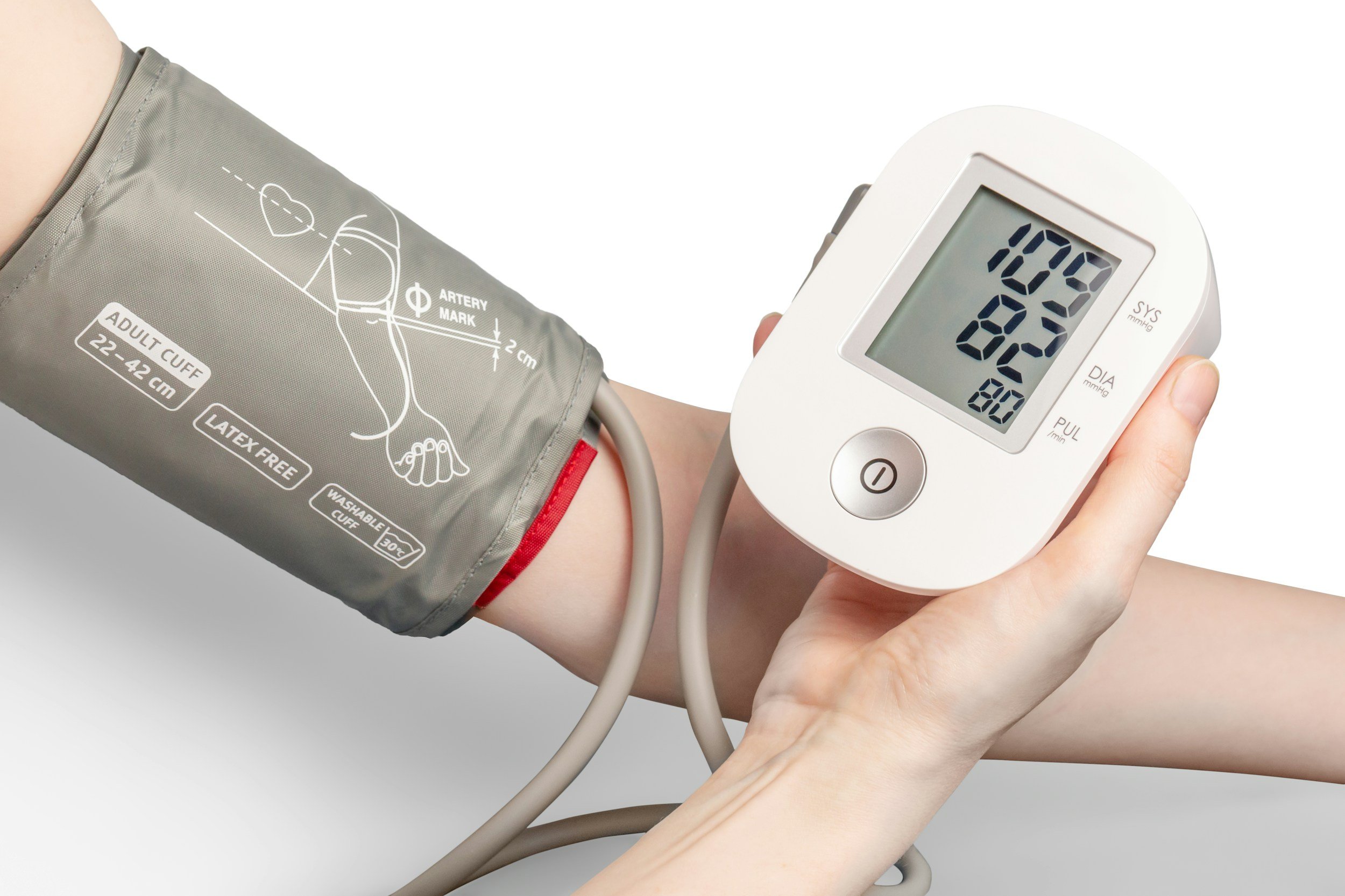
For someone living with Parkinson’s disease, these symptoms may be more than an occasional episode of “low blood pressure.” They may be signs of neurogenic orthostatic hypotension (nOH), an important but sometimes underrecognized non-motor complication of Parkinson’s disease.
In an episode of the Davis Phinney Foundation’s The Parkinson’s Podcast, movement disorder specialist Dr. Salima Brillman discusses what nOH is, why it occurs, how it can affect daily life, and strategies that may help manage it. The conversation includes lifestyle changes, medication options, strategies for managing symptoms, and the importance of communicating symptoms to your healthcare team.
Written by: Dr. Elizabeth Abare, PT, DPT
HAPT Physical Therapist
Dizziness when standing. Feeling lightheaded after a meal. Sudden weakness. Feeling like you might faint or actually fainting.
For someone living with Parkinson’s disease, these symptoms may be more than an occasional episode of “low blood pressure.” They may be signs of neurogenic orthostatic hypotension (nOH), an important but sometimes under-recognized non-motor complication of Parkinson’s disease.
In an episode of the Davis Phinney Foundation’s The Parkinson’s Podcast, movement disorder specialist Dr. Salima Brillman discusses what nOH is, why it occurs, how it can affect daily life, and strategies that may help manage it. The conversation includes lifestyle changes, medication options, strategies for managing symptoms, and the importance of communicating symptoms to your healthcare team.
Dizziness when standing. Feeling lightheaded after a meal. Sudden weakness. Feeling like you might faint or actually fainting.
For someone living with Parkinson’s disease, these symptoms may be more than an occasional episode of “low blood pressure.” They may be signs of neurogenic orthostatic hypotension (nOH), an important but sometimes under-recognized non-motor complication of Parkinson’s disease.
In an episode of the Davis Phinney Foundation’s The Parkinson’s Podcast, movement disorder specialist Dr. Salima Brillman discusses what nOH is, why it occurs, how it can affect daily life, and strategies that may help manage it. The conversation includes lifestyle changes, medication options, strategies for managing symptoms, and the importance of communicating symptoms to your healthcare team.
What Is Neurogenic Orthostatic Hypotension?
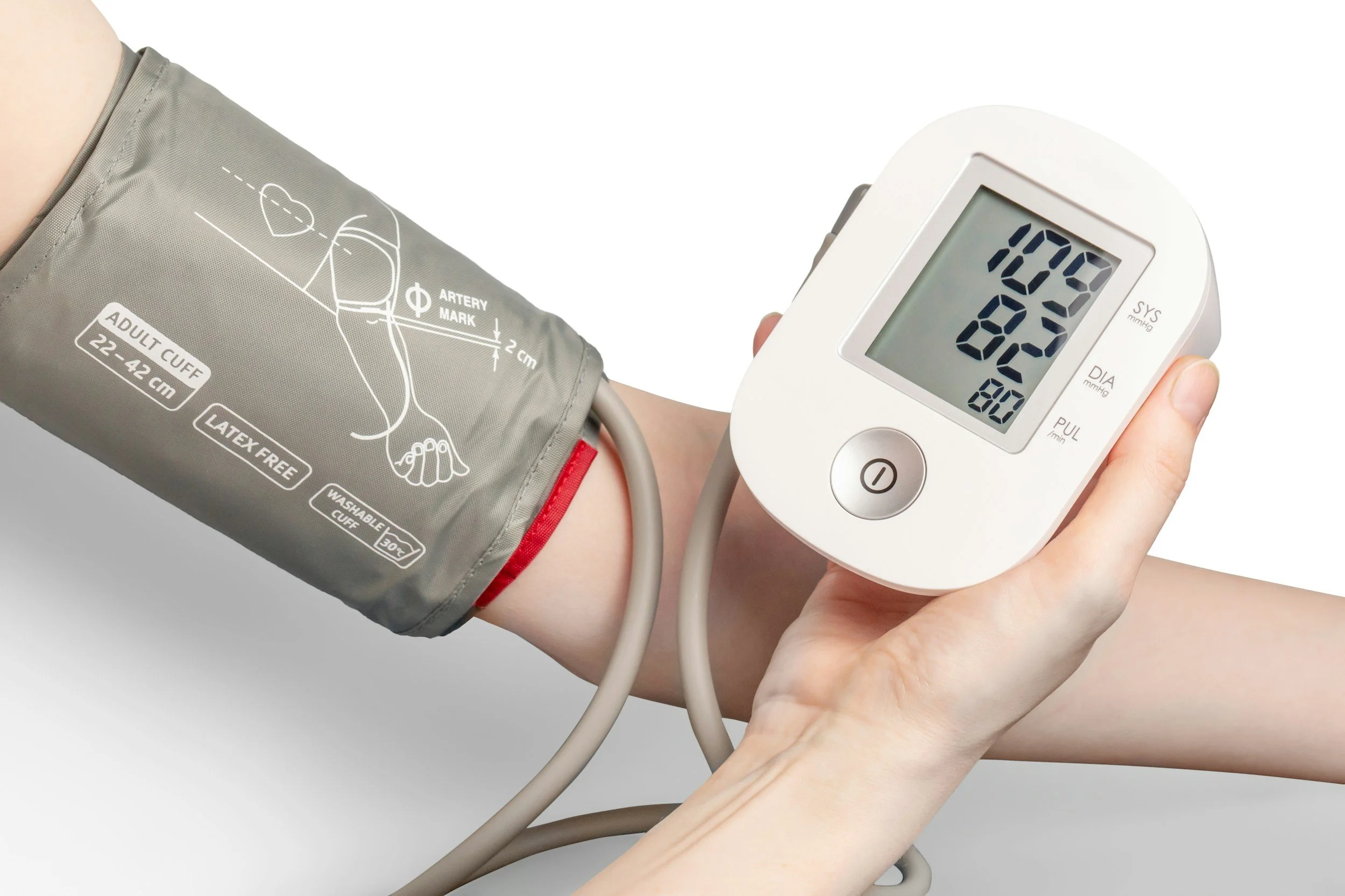
Orthostatic hypotension, or OH, describes a drop in blood pressure associated with a change in position, typically when moving from lying or sitting to standing.
Neurogenic orthostatic hypotension (nOH) is a specific type of orthostatic hypotension caused by dysfunction of the autonomic nervous system.
nOH can occur in neurological conditions such as:
Parkinson’s disease
Multiple system atrophy (MSA)
Lewy body dementia
Other disorders affecting the autonomic nervous system
Normally, when we stand, gravity causes blood to move toward the legs. The nervous system responds by helping the blood vessels constrict so that adequate blood flow continues to the heart and brain.
With nOH, this automatic response does not work as effectively. Blood may pool in the lower body, contributing to a drop in blood pressure and symptoms when a person is upright.
nOH Isn’t Always Just Dizziness
One important message from the podcast is that nOH can present in different ways.
Symptoms may include:
Dizziness
Lightheadedness
Weakness
Feeling faint
Near-fainting
Fainting
Fatigue
Nausea
Headache
Symptoms may be more noticeable at certain times of day or after certain activities, including standing up or eating a meal.
For someone with Parkinson’s disease, these symptoms can have a significant impact on everyday function.
A sudden episode of lightheadedness or fainting while standing, walking, transferring, or navigating stairs can also create a serious fall and injury risk.
Look at the Whole Picture
Before simply adding another medication, it is important for the healthcare team to understand when symptoms are happening and what may be contributing to them.
Some medications may contribute to low blood pressure, including certain medications used to manage Parkinson’s disease.
Symptoms may also be influenced by:
Medication timing
Meals
Hydration
Position changes
Activity
Time of day
One practical strategy is to keep a record of symptoms.
Consider writing down:
What did you feel?
What were you doing when it happened?
Were you lying down, sitting, or standing?
What time did it happen?
Had you recently eaten?
When had you taken your medications?
Did sitting or lying down improve your symptoms?
Did you fall, faint, or nearly faint?
Sharing this information with your neurologist or healthcare provider may help identify patterns and guide treatment.
Lifestyle Strategies for Managing nOH
Lifestyle and behavioral strategies are often an important part of managing nOH.
Depending on the individual and recommendations from their healthcare team, strategies may include:
Stay Hydrated
Adequate hydration can help support blood volume and blood pressure.
Discuss Salt Intake With Your Healthcare Provider
Increasing dietary sodium may be appropriate for some people with nOH, but it is not appropriate for everyone.
Always discuss significant changes in salt intake with your healthcare provider.
Consider Compression Garments
Waist-high compression stockings and/or abdominal compression may help reduce blood pooling in the lower body.
Change Positions Slowly
When moving from lying down to standing, consider progressing gradually:
Lying → Sitting → Standing
Allow your body time to adjust at each position.
Consider Smaller Meals
Large meals, particularly meals high in carbohydrates, may contribute to a drop in blood pressure for some individuals.
Stay Active Safely
Exercise is important for maintaining strength, mobility, balance, and overall function.
For some individuals with nOH, seated or recumbent exercise may be better tolerated than prolonged upright exercise.
Exercise should be individualized based on symptoms, medical history, and safety.
Medications That May Help Manage nOH
When lifestyle strategies are not enough to adequately manage symptoms, medication may be considered.
Common medications discussed in the management of nOH include:
Midodrine
Midodrine helps blood vessels constrict, which can increase blood pressure.
Because it can also raise blood pressure while lying down, the timing of doses is important.
Droxidopa
Droxidopa is converted by the body to norepinephrine.
Norepinephrine plays an important role in helping regulate blood pressure and vascular responses. Droxidopa may be used to help reduce symptoms associated with nOH.
Fludrocortisone
Fludrocortisone helps the body retain sodium and water.
This can increase blood volume and subsequently increase blood pressure. Because it affects fluid and electrolyte balance, patients taking fludrocortisone may require medical monitoring.
Pyridostigmine
Pyridostigmine may help some individuals by influencing communication within the autonomic nervous system.
It may sometimes be used alone or in combination with other treatment strategies.
Medication Management Requires Medical Supervision
There is no single medication or treatment plan that is appropriate for everyone with nOH.
Treatment may depend on:
Symptoms
Other medical conditions
Current medications
Blood pressure patterns
Fall history
Response to previous treatments
Presence of supine hypertension
Medications that increase standing blood pressure may also increase blood pressure while lying down.
Never start, stop, or change a medication without discussing it with your physician or other qualified healthcare provider.
Why nOH Matters in Physical and Occupational Therapy
For physical and occupational therapists working with people with Parkinson’s disease, nOH is not simply a blood-pressure issue.
It can become a mobility, safety, independence, and participation issue.
Symptoms may interfere with:
Getting out of bed
Standing from a chair
Showering and dressing
Preparing meals
Walking around the home
Navigating stairs
Exercising
Leaving the home
Participating in community activities
Fear of dizziness or falling may also cause someone to become less active.
Over time, reduced activity can contribute to weakness, decreased endurance, impaired balance, and further loss of independence.
For individuals receiving skilled rehabilitation, changes in cardiovascular function may also require ongoing assessment and modification of the exercise program for safety. HAPT documentation guidance specifically recognizes fluctuating cardiovascular function as a factor that can require assessment and modification during treatment.
How Physical and Occupational Therapy Can Help
For someone with Parkinson’s disease and nOH, rehabilitation may need to account for both neurological and cardiovascular factors.
An individualized therapy program may include:
Monitoring symptoms and cardiovascular responses during activity
Education regarding safe positional changes
Balance and fall-prevention training
Strengthening
Gait and mobility training
Transfer training
Seated or recumbent exercise when appropriate
Environmental modifications
Energy-conservation strategies
Caregiver education
Strategies to improve safety with activities of daily living
Communication with the patient’s healthcare team when concerning symptoms are identified
The therapist may also need to modify the intensity, position, duration, or type of exercise based on the individual’s response.
Don’t Ignore the Symptoms
One of the most important takeaways from Dr. Brillman’s discussion is that people with Parkinson’s disease and their care partners should talk about these symptoms rather than simply accepting them as part of Parkinson’s disease or aging.
If you experience dizziness, lightheadedness, unusual weakness, near-fainting, or fainting when you stand, tell your healthcare provider.
Keep track of when symptoms happen and what you were doing at the time.
Identifying nOH and developing an individualized management plan may help:
Reduce symptoms
Improve safety
Decrease fall risk
Support mobility and exercise
Maintain independence
Keep you participating in the activities that matter most
Listen to the Full Podcast
For a deeper discussion of neurogenic orthostatic hypotension, including symptoms, lifestyle strategies, medications, and considerations for people living with Parkinson’s disease, listen to:
The Parkinson’s Podcast: Understanding nOH (Neurogenic Orthostatic Hypotension) with Dr. Salima Brillman
Davis Phinney Foundation for Parkinson’s
🎧 Watch or listen on YouTube:
Understanding nOH with Dr. Salima Brillman – The Parkinson’s Podcast
How Healthy Aging Physical Therapy Can Help
At Healthy Aging Physical Therapy (HAPT), we provide at-home physical and occupational therapy with specialized services for older adults and people living with Parkinson’s disease.
Our approach focuses on helping people:
Improve balance
Reduce fall risk
Maintain strength and mobility
Exercise safely
Navigate their home environment
Maintain independence
Continue participating in meaningful activities
Move Better. Feel Better. Live Better.
Healthy Aging Physical Therapy
📞 (617) 398-4508
🌐 HealthyAgingPT.com
Medical Disclaimer
This article is for educational purposes only and is not a substitute for individualized medical advice, diagnosis, or treatment. Blood-pressure management, medication changes, fluid intake, and sodium intake should be discussed with your physician or other qualified healthcare provider.

What is Occupational Therapy? (And How It Can Help You!)
Discover what Occupational Therapy really is and how it helps older adults stay safe, independent, and confident at home. Learn how outpatient Occupational Therapy can improve everyday activities like dressing, bathing, cooking, medication management, home safety, fall prevention, and more. Healthy Aging Physical Therapy explains the difference between Occupational Therapy and Physical Therapy, who can benefit from OT, and why receiving care in your home leads to more personalized, meaningful results.

If you've ever wondered what an occupational therapist actually does, you're not alone.
At Healthy Aging Physical Therapy, we're incredibly fortunate to have an amazing team of Occupational Therapists who help our patients stay safe, independent, and engaged in the activities that matter most. Yet despite the tremendous value OT provides, it's also one of the most misunderstood healthcare professions.
When we recommend Occupational Therapy to a patient or caregiver, we often hear responses like:
"I don't need OT—I can dress myself."
"My husband helps me with those things."
"I already had OT when I was in the hospital."
These are all common misconceptions, and they're understandable. For many people, their only experience with Occupational Therapy has been during a short hospital stay or inpatient rehabilitation, where the focus is often on helping someone become safe enough to return home.
But Occupational Therapy can offer so much more.
This month, we wanted to take some time to highlight the many ways Occupational Therapists help older adults remain independent, improve safety, simplify everyday tasks, and continue doing the activities that bring meaning to their lives.
So What DOES an Occupational Therapist Do?
Occupational Therapists evaluate how health conditions affect your ability to perform everyday activities, including:
Getting dressed
Bathing safely
Preparing meals
Managing medications
Getting on and off the toilet or in and out of bed
Using your hands for cooking, writing, or hobbies
Remembering daily routines
Safely moving around your home
Conserving energy throughout the day
Rather than simply treating a diagnosis, Occupational Therapists look at the whole picture:
Your home
Your daily routines
Your goals
Your caregivers
The obstacles preventing you from living as independently as possible
The goal of Occupational Therapy isn't simply to identify challenges—or even just to prescribe exercises.
It's about understanding how physical, cognitive, sensory, or environmental factors are affecting your daily life and then creating an individualized plan to address them. Sometimes that means rehabilitating a skill through targeted treatment to improve strength, coordination, cognition, or function. Other times, it means compensating with adaptive strategies, environmental modifications, or assistive equipment that allows you to safely and confidently accomplish the task in a different way.
These approaches are often intertwined. An Occupational Therapist may work to improve your abilities while simultaneously teaching strategies that help you remain successful during the recovery process—or when certain changes can't be completely reversed.
Ultimately, the goal is to maximize your independence, safety, confidence, and quality of life so you can continue participating in the everyday activities that matter most to you—not just today, but for years to come.
Who Can Benefit from Occupational Therapy?
Occupational Therapy is appropriate for many older adults, including those living with:
Parkinson's disease
Stroke
Arthritis
Joint replacements
Neurological conditions
Multiple sclerosis
Hand injuries
Memory changes or early dementia
General weakness after hospitalization
Frequent falls or fear of falling
Many people assume they need to wait until they're "disabled" before seeing an OT.
In reality, Occupational Therapy is often most effective when challenges are identified and addressed early—before they become major barriers to independence. Small changes in strength, balance, hand function, memory, vision, endurance, or confidence can gradually make everyday tasks more difficult. Left unaddressed, these small challenges can snowball into falls, injuries, loss of independence, or increased reliance on family members and caregivers.
Why Outpatient Occupational Therapy in Your Home Is So Effective
At Healthy Aging Physical Therapy, we provide outpatient Occupational Therapy in the comfort of your home. That means you receive the same high-quality, one-on-one therapy you would expect from an outpatient clinic, but in the environment where you spend your everyday life.
While avoiding traffic, parking, and waiting rooms is certainly a bonus, the greatest benefit is that therapy becomes immediately practical, personalized, and meaningful.
We Treat You Where Life Actually Happens
The challenges you experience don't happen in a therapy gym—they happen in your bathroom, your kitchen, your bedroom, your front entryway, and while completing the routines that make up your day.
By working in your own home, your Occupational Therapist can see firsthand what's making daily activities difficult. Rather than guessing or relying on descriptions, we can evaluate your actual environment and develop solutions that fit your home, your routines, and your goals.
Therapy Is Functional from Day One
Instead of practicing simulated tasks in a clinic, we practice the activities you actually want and need to do.
That might include:
Safely getting in and out of your own shower
Preparing meals in your own kitchen
Organizing medications where you normally keep them
Learning strategies for navigating your own stairs
Reaching items in your own cabinets
Safely completing laundry or household tasks
Because therapy is directly connected to your daily routine, the skills you learn are immediately applicable and easier to carry over into everyday life.
We Can Identify Problems Before They Become Bigger Ones
Many safety concerns aren't obvious until someone observes you moving around your own home.
Your Occupational Therapist can identify fall hazards, recommend simple environmental modifications, suggest adaptive equipment when appropriate, and teach strategies that make everyday activities safer and more efficient—all while preserving your independence.
Often, small changes can make a tremendous difference in confidence, safety, and quality of life.
We Partner with your Caregivers
When family members or caregivers are involved, home-based Occupational Therapy allows us to provide education and hands-on training in the environment where care is actually being provided.
Whether it's learning safer transfer techniques, simplifying daily routines, or creating strategies for someone living with Parkinson's disease, dementia, or another neurological condition, we can coach caregivers in real time using the home's actual layout and daily routines.
The Goal Is Independence at Home
Ultimately, our mission is simple: to help you continue living safely, confidently, and independently in the place you call home.
By combining evidence-based outpatient therapy with the real-world advantages of treating you in your own environment, we can develop solutions that are practical, personalized, and designed to support your independence for years to come.
Can an Occupational Therapist Recommend the Best Adaptive Equipment for Me?
Yes! Occupational Therapists are experts in identifying adaptive equipment and assistive devices that can make everyday activities safer, easier, and more independent. Whether it's recommending the right shower chair, grab bars, raised toilet seat, reacher, dressing aids, kitchen tools, or mobility accessories, your Occupational Therapist can help you determine what equipment is appropriate—and just as importantly, teach you how to use it correctly.
But choosing equipment is only one part of the evaluation.
Before recommending a solution, an Occupational Therapist first asks why a task has become difficult.
Is it because of weakness? Poor balance? Decreased coordination? Pain? Fatigue? Vision changes? Memory concerns? Or is the environment itself making the task more challenging?
Understanding the underlying cause allows us to recommend the most effective approach.
Sometimes that means rehabilitating the problem through strengthening, coordination training, cognitive rehabilitation, or practicing functional activities. Other times, it means teaching new techniques, modifying the environment, or introducing adaptive equipment that allows you to complete the task more safely and efficiently.
More often than not, it's a combination of both.
Our goal isn't simply to recommend equipment—it's to help you find the right combination of rehabilitation, education, environmental modifications, and adaptive tools to maximize your independence, safety, and quality of life.
Is Occupational Therapy Only for People Recovering from Surgery?
Not at all.
Although Occupational Therapy is commonly provided after surgery or a hospitalization, many people benefit from OT long before—or long after—those events.
You might be a good candidate if everyday tasks are becoming more difficult than they used to be.
Maybe you're taking longer to get dressed. Perhaps you're avoiding cooking because standing is exhausting. Maybe opening jars has become frustrating, getting in and out of the shower feels less secure, or you're noticing changes in memory that are affecting your daily routine.
These small changes are often early signs that your body or brain is working harder to complete everyday tasks.
Occupational Therapy helps identify those challenges, address the underlying causes whenever possible, and develop practical strategies so you can continue living safely and independently.
You don't have to wait until something major happens to benefit from Occupational Therapy.
The Bottom Line
Whether that's cooking a favorite family recipe, gardening, safely caring for your spouse, getting dressed independently, or simply feeling confident walking through your own home, Occupational Therapy focuses on helping you live life as fully and independently as possible.
At Healthy Aging Physical Therapy, we believe the best place to learn how to live safely at home is...your home.
If you or someone you love is finding everyday activities more difficult than they used to be, Occupational Therapy may be exactly the support you've been looking for.
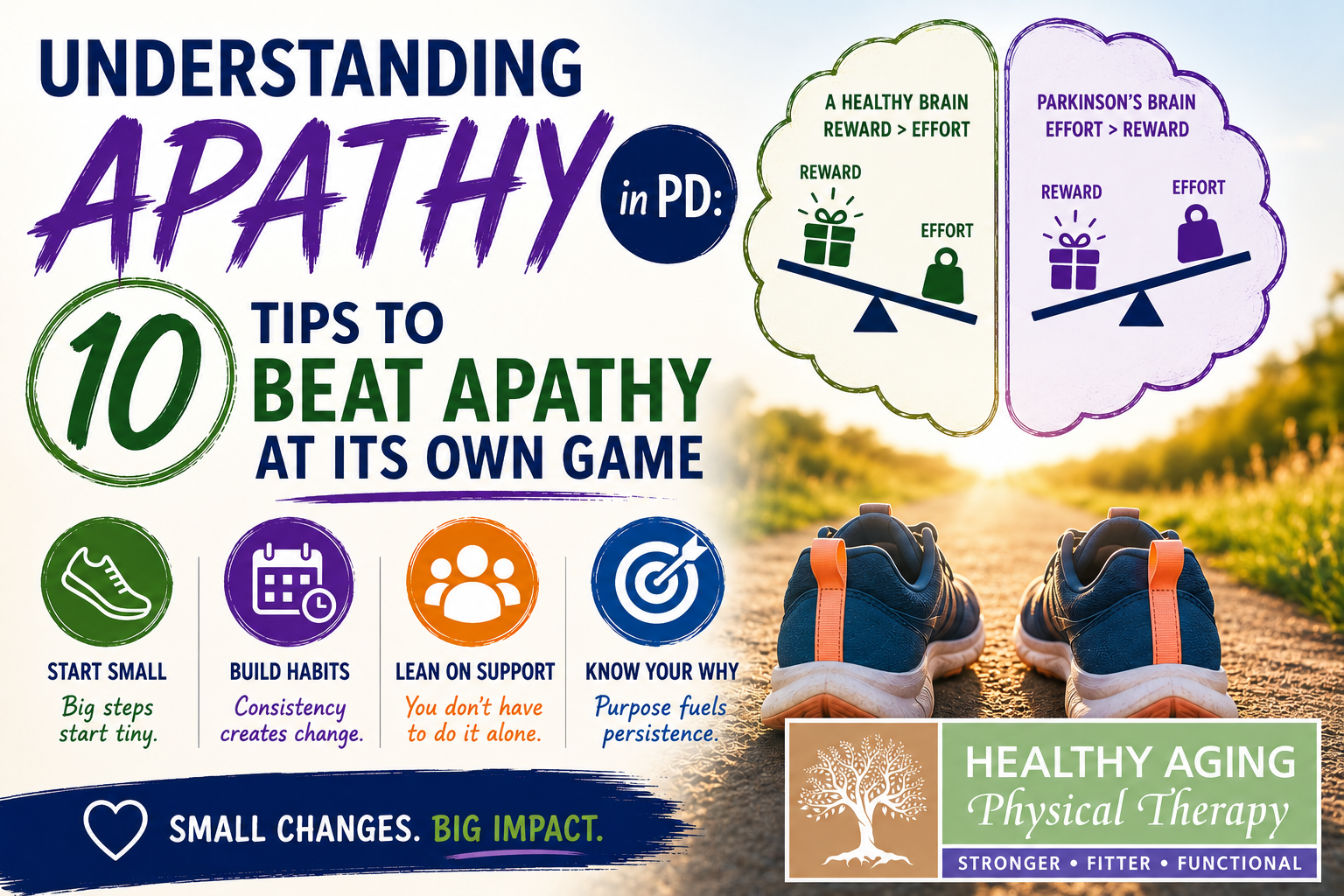
Understanding Apathy in PD: 10 Ways to Beat Apathy at Its Own Game
Discover why apathy in Parkinson's disease is not laziness, but a neurological symptom that changes how the brain calculates effort and reward. Learn the science behind Parkinson's-related apathy and 10 practical, evidence-informed strategies to overcome it and stay engaged in exercise, social activities, and daily life.
When I think about apathy, I picture my now 15-year-old daughter as a toddler. Back then, whenever I asked her to do something she didn't want to do, her response was almost always the same:
"Don't wanna."
Pick up your toys? Don't wanna.
Put on your shoes? Don't wanna.
Go to dance class and leave mom behind? Definitely don't wanna.
Fortunately, she eventually outgrew that stage. But when I think about apathy in Parkinson's disease, I often think about that same simple response — not because people with Parkinson's are acting like toddlers, and certainly not because they're being stubborn or difficult, but because from the brain's perspective, apathy can sometimes be just that simple.
The Parkinson's brain looks at an activity — even one that is important, meaningful, or enjoyable—and responds with a very quick internal calculation:
"Don't wanna."
The challenging part is that this isn't a response you can always reason with. When we don't understand apathy, we often default to motivational strategies that work for people without Parkinson's disease. We remind people that exercise is good for them. We tell them their physical therapist recommended it. We encourage them to try harder, stay active, or think positively. All of those statements are logical, and all of them may be true. Unfortunately, apathy is not a problem of logic.
Apathy is a neurobiological brain problem - and it is an incredibly common and consistent non-motor symptom of Parkinson’s Disease.
Because of that, apathy can create frustration for everyone involved. Care partners may feel ignored or dismissed. Adult children may worry that their parent is giving up. Healthcare providers can spend months educating someone about exercise, medication management, or healthy habits only to see little follow-through. Meanwhile, the person with Parkinson's often feels guilty, ashamed, or misunderstood because they know what they should be doing but struggle to get started.
The result is that everyone is working hard, but they're working against a barrier they don't fully understand.
The good news is that once we understand the neurobiology behind apathy — what it is, why it happens, and how Parkinson's changes the brain's motivation systems — we can start to work around it instead of against it. Understanding apathy gives us the KEYS to beating apathy at its own game.
What Is Apathy?
Apathy is one of the most common non-motor symptoms of Parkinson's disease, affecting an estimated 20–50% of people living with Parkinson's and becoming more common as the disease progresses. Despite how frequently it occurs, it is also one of the most misunderstood symptoms.
Apathy is often mistaken for laziness, depression, lack of effort, or lack of interest. In reality, it is none of those things.
While depression is characterized by sadness, hopelessness, or loss of pleasure, apathy is primarily a disorder of motivation and initiation. People with apathy often still care deeply about their families, hobbies, health, and future. They may want to exercise, attend social events, participate in therapy, or spend time with friends. The challenge is not that they don't care. The challenge is that turning intention into action has become significantly harder.
One of the most helpful ways to understand apathy is to think of it like a Reward vs. Effort Seesaw.
In a healthy brain, the anticipated reward of an activity generally outweighs the effort required to do it. The brain looks at an activity and thinks, "Going for a walk will feel good," or "I'll enjoy seeing my friends," or "Exercise is worth the effort." The reward side of the seesaw stays high, making it easier to get started.
Parkinson's disease can alter that internal cost-benefit calculation. Researchers increasingly believe that apathy reflects changes within the brain's motivation circuits, many of which rely on dopamine and related neurotransmitter systems. As those circuits change, the brain begins to overestimate effort and underestimate reward. The seesaw flips. Activities that once felt worthwhile now feel burdensome before they've even begun.
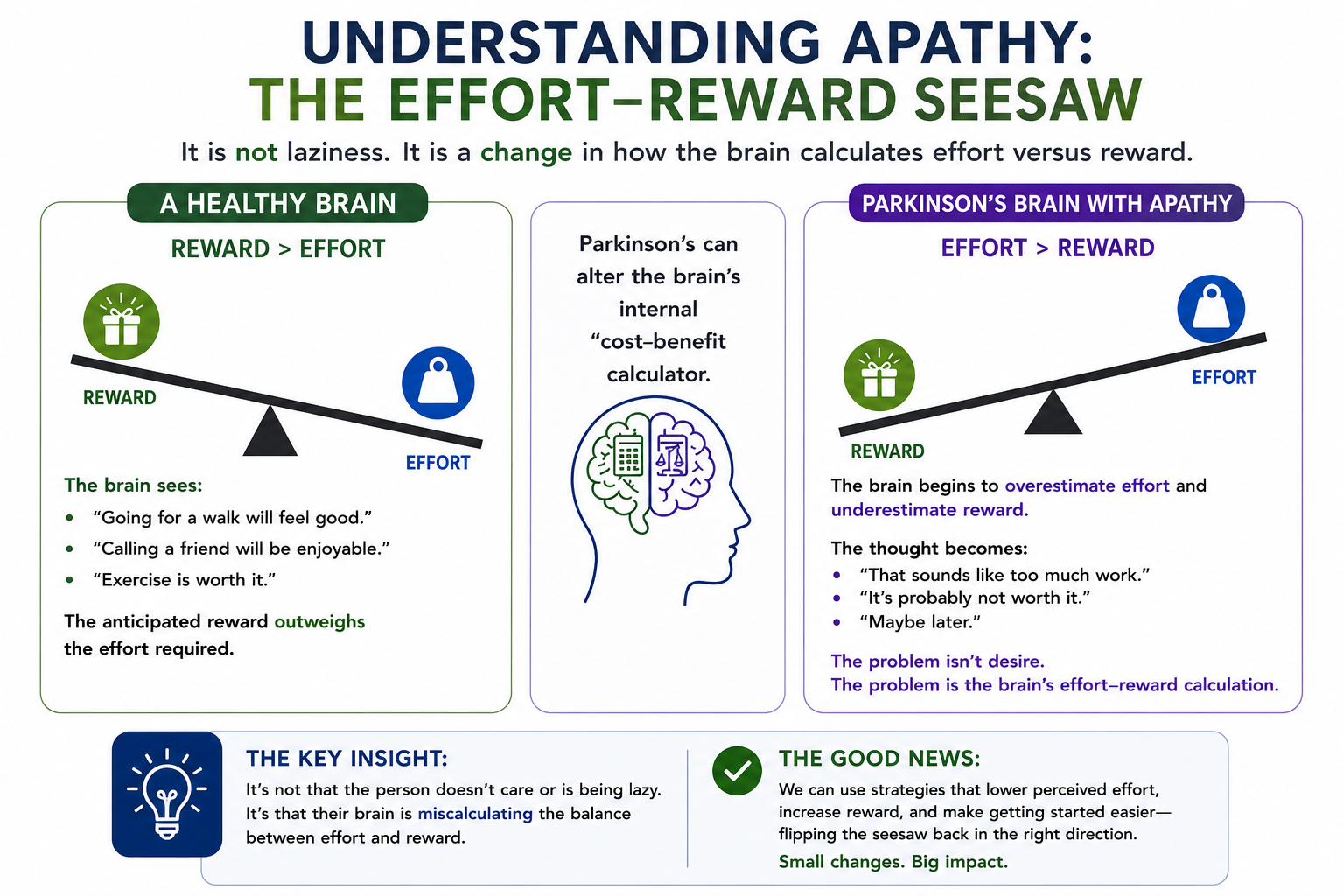
The internal dialogue becomes:
That sounds like a lot of work.
It's probably not worth it.
Maybe later.
Don't wanna.
What's fascinating is that many people with Parkinson's report feeling better after they exercise, attend a class, go for a walk, or meet up with friends. The activity itself wasn't the problem. The challenge was overcoming the brain's initial effort-reward calculation and getting started in the first place.
This understanding is important because it shifts our approach from trying to convince people to be motivated to creating systems that make action easier.
Using the COM-B Model to Outsmart Apathy
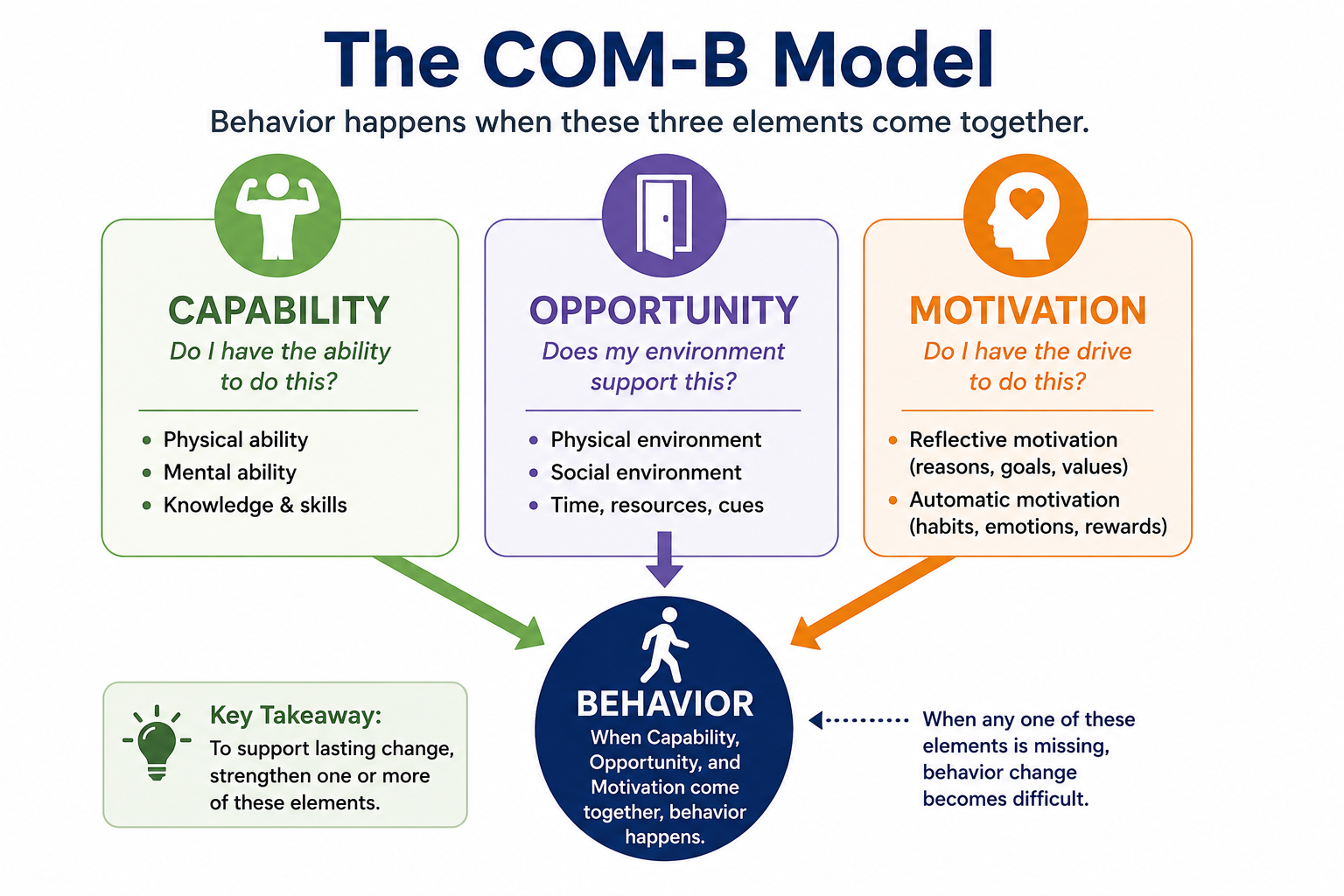
One of the most useful behavior-change frameworks discussed at the World Parkinson Congress was the COM-B Model. COM-B proposes that behavior occurs when three things come together:
Capability – Do I have the physical and cognitive ability to do this?
Opportunity – Does my environment support this behavior?
Motivation – Do I have enough drive, reward, habit, or reason to act?
When apathy is present, motivation is often the most obvious barrier, but it's rarely the only one. Sometimes the behavior is physically too difficult. Sometimes the environment creates unnecessary obstacles. Sometimes the reward feels too distant or too small to justify the effort.
The encouraging part is that we don't always have to increase motivation directly. In fact, trying to "motivate" someone with Parkinson's-related apathy is often the least effective approach. Instead, we can change the environment, simplify the task, build routines, leverage social support, and reconnect the activity to something meaningful. We can start to beat apathy at its own game! The following strategies are designed to do exactly that.
1. Think 1%, Not 100%
One of the most common mistakes people make is trying to change everything at once. Someone who hasn't exercised in months decides they're going to start walking 30 minutes every day. Someone who struggles with household tasks creates a long to-do list. Someone who wants to improve their health commits to changing their entire lifestyle overnight.
The Parkinson's brain often looks at those goals and immediately calculates the effort required. The result is predictable:
"Don't wanna."
Instead of focusing on the final destination, focus on the smallest possible first step. James Clear, author of Atomic Habits, calls this becoming "the type of person who shows up." The goal isn't to complete the workout. The goal is to begin.
For example, instead of committing to a 30-minute walk, commit to putting on your sneakers. Instead of promising yourself you'll complete your entire exercise program, commit to doing one exercise. Instead of attending an hour-long support group, commit to walking through the door. When I go running (which in case you're wondering my brain shouts loudly ‘Don’t wanna!!!), I give myself mini-goals - I’m not out there to run 3 miles, but I am going to run to the next driveway.
The beauty of small actions is that they dramatically reduce perceived effort while creating momentum. Often the hardest part isn't the activity itself—it's getting started.
COM-B Target: Opportunity and Motivation
2. Lower the Starting Line
Closely related to the 1% rule is the idea of lowering the starting line. We tend to believe success comes from raising expectations. In reality, success often comes from making the first step easier.
Many people with Parkinson's create goals that are so ambitious they become intimidating. The brain sees a mountain and decides it would rather stay on the couch.
Lowering the starting line means creating a version of success that feels almost impossible to fail.
If your goal is strength training, perhaps success today is one set of sit-to-stands.
If your goal is walking, perhaps success is walking to the mailbox.
If your goal is exercising three times this week, perhaps success is getting dressed in your exercise clothes and going to check out the local gym or observing a local PD fitness class.
The goal isn't to stay there forever. The goal is to create enough forward momentum that the next step becomes easier.
COM-B Target: Capability and Opportunity
3. Use Activation Before Motivation
Many people believe motivation comes first and action follows, but research suggests the opposite is often true. We wait to feel motivated before exercising. We wait to feel inspired before starting a project. We wait to feel energetic before going out with friends.
The problem is that motivation is unreliable.
Behavioral science consistently shows that action often creates motivation rather than the other way around. Once we begin moving, the brain receives new information. The activity may be enjoyable. We may feel accomplished. We may realize the task wasn't nearly as difficult as anticipated.
For someone with Parkinson's, this is a powerful concept because it shifts the goal from "feel motivated" to "take one action."
You don't have to want to go to exercise class.
You just have to get in the car.
COM-B Target: Motivation
4. Make It Visible
One of the easiest ways to improve follow-through is to redesign your environment.
The more effort required to remember a behavior, the less likely it is to happen. This becomes particularly important in Parkinson's disease, where cognitive load may already be increased. Think about your daily environment.
Do your walking shoes live in the back of a closet?
Are your exercise bands buried in a drawer?
Do you have to search for your water bottle every morning?
Every additional step increases friction.
Instead, place cues where you'll see them. Leave your walking shoes by the door. Keep exercise equipment near your favorite chair. Put your medication organizer somewhere visible. Use calendars, reminders, and visual prompts.
Successful habits often depend less on willpower and more on environment.
COM-B Target: Opportunity
5. Borrow Motivation From Other People
One of the strongest findings in Parkinson's exercise research is that people tend to do better when they're connected to others. Humans are social creatures and we are far more likely to show up when someone else is expecting us.
A walking partner creates accountability.
An exercise class creates routine.
A support group creates connection.
A personal trainer creates structure.
Social support also provides something equally important: encouragement during the inevitable periods when motivation is low. There will be days when you don't feel like exercising. There will be days when symptoms are frustrating. Having people around you who understand those challenges can make all the difference.
Sometimes we don't need more motivation.
Sometimes we just need good company.
COM-B Target: Opportunity and Motivation
6. Schedule It Like a Medication
Most people don't wake up each morning and ask themselves whether they feel motivated to take their medication - They simply do it.
Exercise and meaningful activities deserve the same level of commitment.
One of the most effective strategies for overcoming apathy is removing the decision altogether. Rather than deciding each day whether you'll exercise, decide once and put it on the calendar.
Monday at 10:00 AM.
Wednesday at 10:00 AM.
Friday at 10:00 AM.
Done.
Every decision requires energy. Every decision creates an opportunity for the Parkinson's brain to say "maybe later." Scheduling turns exercise from a choice into a routine.
COM-B Target: Opportunity
7. Celebrate Tiny Wins
The Parkinson's brain can become very good at focusing on what's missing.
"I only walked ten minutes."
"I didn't finish everything."
"I should have done more."
Unfortunately, this mindset reduces reward and reinforces apathy. Behavioral science teaches us that behaviors that get rewarded tend to get repeated. The reward doesn't need to be large. It simply needs to exist.
Did you exercise today? Celebrate it.
Did you attend your support group? Celebrate it.
Did you do one exercise instead of none? Celebrate it.
Your celebration can be a physical ‘air-five’ to yourself, a verbalized ‘You did great today! or a check-off on your tracking worksheet. Progress is progress and repeated acknowledgement of your success will help reset your reward vs. effort seesaw in the proper direction.
Tiny wins create momentum, confidence, and a stronger sense of self-efficacy.
COM-B Target: Motivation
8. Focus on Progress, Not Perfection
Perfectionism can be surprisingly damaging.
When people believe success means doing everything perfectly, they often choose not to start at all.
Missed one workout? The week feels ruined.
Missed a few days? The month feels ruined.
Behavior change doesn't work that way.
The people who succeed long-term aren't the people who never miss a day. They're the people who recover quickly when they do.
One missed workout doesn't matter.
One missed week doesn't matter.
What matters is returning.
Apathy loves all-or-nothing thinking. Progress thrives on flexibility. Instead of letting one missed opportunity derail the next, adopt a ‘next best decision’ mindset and take focus forward, not behind you.
COM-B Target: Motivation
9. Pair Activities With Something Enjoyable
Researchers sometimes call this "temptation bundling."
The idea is simple: combine something you need to do with something you enjoy doing to help increase the immediate reward associated with the activity.
Try listening to your favorite podcast while walking or saving your favorite television show for while you ride your riding the stationary bike.
Make a plan to meet a friend for coffee after exercise class.
The Parkinson's brain often discounts future rewards. Pairing an activity with something enjoyable helps bring some of that reward into the present moment.
COM-B Target: Motivation
10. Know Your Why
This may be the most important strategy of all.
People don't stay motivated because of exercise - they stay motivated because of what exercise allows them to do. If you ask most people why they exercise, most will answer something like ‘I know it’s good for me’ or ‘my doctor said to’ but that's not a why - that's an instruction.
A real why needs to be much more personal.
Maybe it's so you can keep attending your granddaughter's soccer games, or walk on the beach during your annual family vacation.
Maybe it's so you can keep traveling, gardening or playing pickleball with your friends
Maybe it's dancing at a wedding - or being able to walk your daughter down the aisle.
Maybe it's remaining independent and continuing to live in your own home.
THESE are reasons worth fighting for.
When symptoms are challenging and motivation is low, your why becomes an anchor. It reminds you that exercise isn't really about exercise. It's about protecting the life you want to continue living.
Write your why down.
Put it on the refrigerator.
Keep it in your wallet.
Talk about it with your family.
And when the Parkinson's brain says "don't wanna," remind yourself why you started in the first place.
Hold your why tight.
The Bottom Line
Apathy lies.
It tells you the effort is too great. It tells you it isn't worth it. It tells you you'll do it tomorrow, but the science tells a different story.
Most people feel better after they start.
Most people discover the activity wasn't nearly as difficult as their brain predicted.
And most people find that small actions, repeated consistently over time, can create remarkable changes in strength, mobility, confidence, independence, and quality of life.
The goal isn't to overpower apathy through sheer willpower. The goal is to understand how Parkinson's changes the brain's effort vs. reward calculation and then build systems that make action easier.
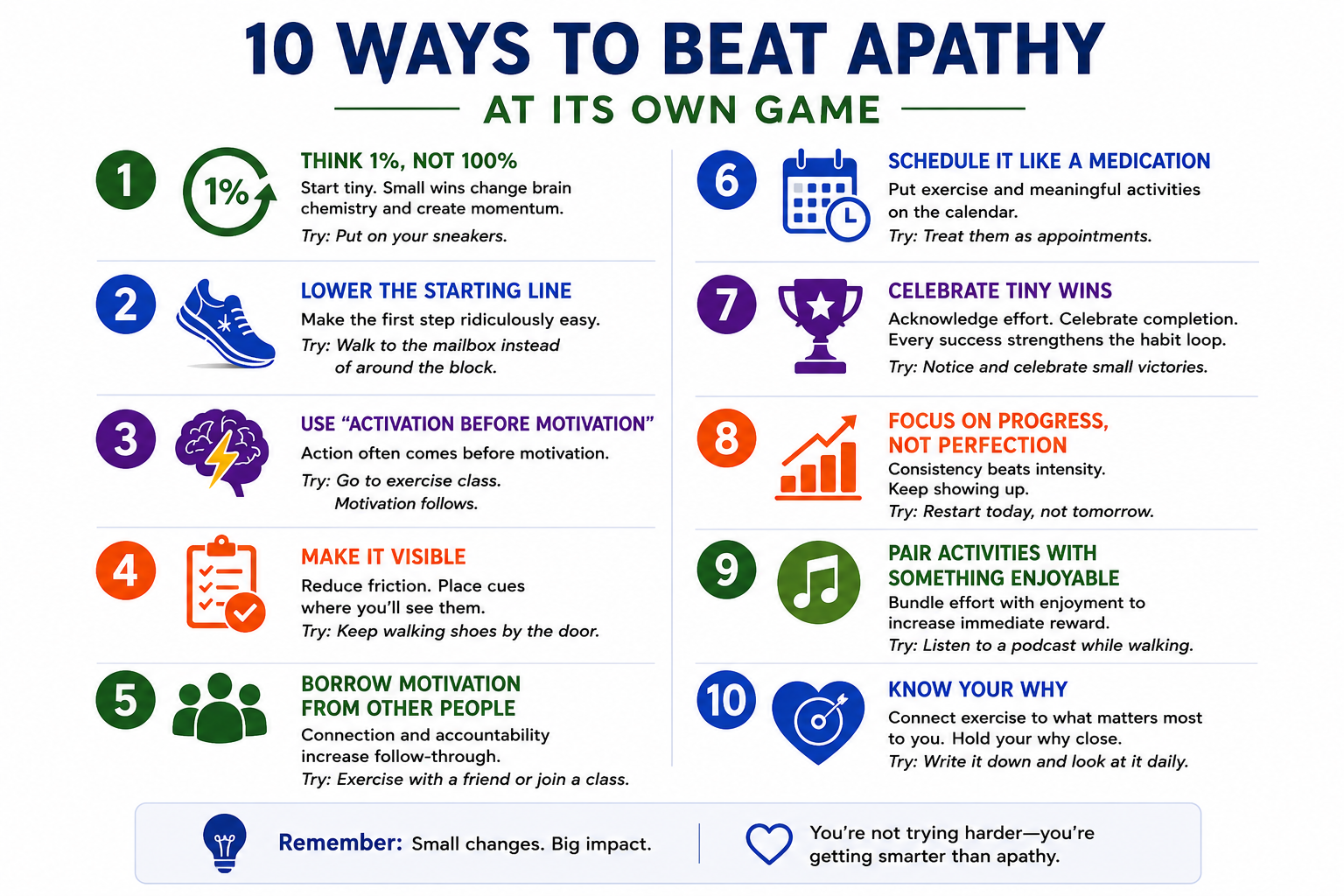
Start small.
Make it visible.
Use support.
Know your why.
And remember: sometimes beating apathy isn't about trying harder.
It's about outsmarting it and beating it at its own game. And PS: If your brain responded ‘don’t wanna’ after reading all 10 of these tips, it’s because 10 tips is too much right now. Follow the 1% rule and pick ONE TIP and start there. I promise it will help.
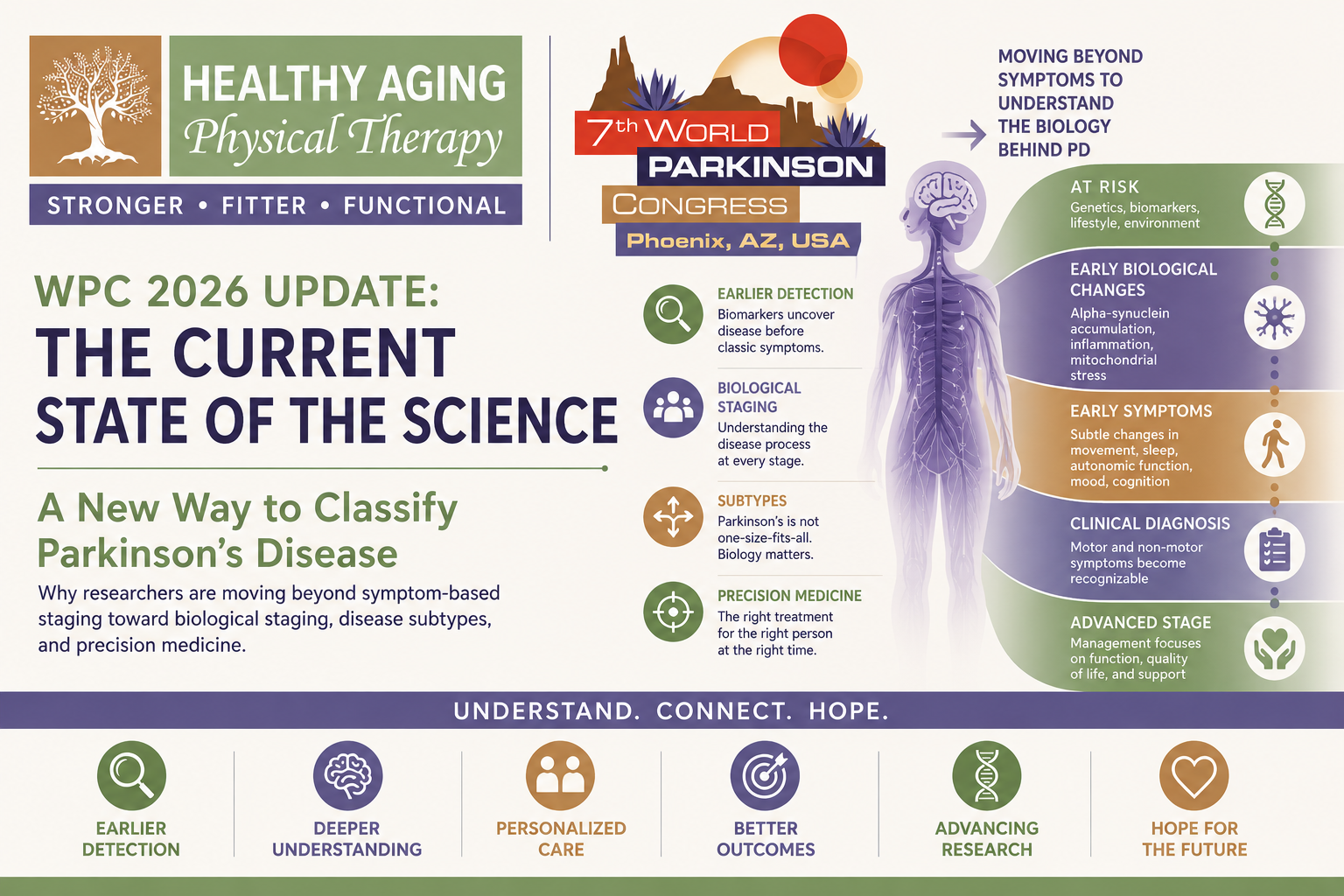
WPC 2026 Update: The Current State of the Science - a New Way to Classify Parkinson’s Disease
Why researchers are moving beyond symptom-based diagnosis toward biological staging systems, disease subtypes, and precision medicine.
Why researchers are moving beyond symptom-based diagnosis toward biological staging systems, disease subtypes, and precision medicine.
One of the most important themes I heard repeatedly at the World Parkinson Congress wasn't about a specific medication, gene, or scientific breakthrough.
It was about something much more fundamental:
How we classify Parkinson's disease.
For decades, Parkinson's disease has largely been diagnosed and staged based on what we can see.
How severe is the tremor?
How much has walking changed?
How much assistance does someone need?
How much disability is present?
Those questions remain incredibly important. But researchers are increasingly recognizing a major limitation:
Two people can look remarkably similar clinically while having very different disease biology.
And two people with very different symptoms may actually share many of the same underlying biological processes.
This realization is driving one of the biggest shifts currently occurring in Parkinson's research—the move from symptom-based classification toward biologic classification.
The Traditional Way We Stage Parkinson's Disease
Historically, clinicians have relied heavily on two major systems.
Hoehn & Yahr Staging
The Hoehn & Yahr scale was first developed in 1967 and remains one of the most widely recognized Parkinson's staging systems.
It focuses primarily on motor symptoms and overall disability.
The stages range from:
Stage 1: Mild, unilateral symptoms
Stage 2: Bilateral involvement
Stage 3: Balance impairment develops
Stage 4: Significant disability but able to walk independently
Stage 5: Wheelchair dependence or need for substantial assistance
The system remains useful because it provides a simple snapshot of disease severity.
However, it has important limitations.
It tells us very little about cognition, sleep, autonomic dysfunction, mood, fatigue, pain, or many of the symptoms that often have the greatest impact on quality of life.
MDS-UPDRS
The Movement Disorder Society-Unified Parkinson's Disease Rating Scale (MDS-UPDRS) provides a much more comprehensive assessment.
It evaluates:
Motor symptoms
Activities of daily living
Non-motor symptoms
Motor complications
The MDS-UPDRS remains the gold standard outcome measure used in both clinical practice and research.
But even this system measures what Parkinson's disease looks like—not necessarily what is happening biologically underneath.
The Problem With Symptom-Based Classification
One of the strongest messages throughout the conference was that symptoms often appear late in the disease process.
Researchers frequently referenced the idea that many people may lose 50% or more of their dopamine-producing neurons before developing recognizable motor symptoms.
If that is true, then traditional staging systems begin measuring disease only after substantial neurodegeneration has already occurred.
Imagine trying to stage heart disease only after someone develops heart failure.
Or trying to stage osteoporosis only after a hip fracture occurs.
That's essentially where Parkinson's disease has historically been.
Researchers are now trying to move the timeline much earlier.
Enter Biological Staging
The field is increasingly shifting toward biologic staging systems that focus on what is happening inside the body before symptoms become obvious.
Rather than asking:
"How severe are the symptoms?"
Researchers are beginning to ask:
"What biological processes are occurring right now?"
This is a fundamentally different way of thinking about Parkinson's disease.
The Alpha-Synuclein Revolution
Much of this shift has been driven by advances in biomarkers.
For the first time, researchers can identify evidence of abnormal alpha-synuclein accumulation in living people through:
Cerebrospinal fluid testing
Skin biopsies
Seed amplification assays
These technologies allow researchers to identify biological evidence of Parkinson's-related pathology before traditional clinical diagnosis in some individuals.
This has created an entirely new framework for thinking about disease progression.
The NSD-ISS Framework
One of the most discussed systems at WPC was the Neuronal Synuclein Disease Integrated Staging System (NSD-ISS).
The goal of NSD-ISS is to create a biologically informed framework that captures disease progression before traditional symptoms appear.
Rather than focusing solely on visible symptoms, the system incorporates:
Alpha-synuclein biomarkers
Genetic risk factors
Early clinical features
Prodromal symptoms
Motor symptoms
The hope is that this will allow researchers to identify individuals much earlier and intervene before significant neurodegeneration occurs.
While still primarily a research tool, many experts believe biologic staging systems will become increasingly important over the next decade.
Why Earlier Staging Matters
The importance of biologic staging becomes obvious when you consider disease-modifying therapies.
Most current experimental treatments are trying to:
Reduce alpha-synuclein accumulation
Improve lysosomal function
Reduce inflammation
Protect mitochondria
Preserve neurons
But these therapies may work best before extensive neuronal loss has occurred.
If researchers can identify people earlier, future treatments may have a much greater chance of altering disease progression.
In other words:
Earlier diagnosis creates earlier opportunities for intervention.
Parkinson's Disease May Not Be One Disease
Perhaps the most fascinating concept discussed at the conference was that Parkinson's disease may actually represent multiple biologic diseases that produce similar symptoms.
This idea is beginning to reshape the field.
Historically, Parkinson's disease has been treated as a single disorder.
Researchers now increasingly suspect that what we call "Parkinson's disease" may actually represent several overlapping biological pathways leading to a similar clinical outcome.
This brings us to the concept of subtyping.
Brain-First vs Body-First Parkinson's Disease
One of the most exciting biologic subtype discussions involved the concept of Brain-First versus Body-First Parkinson's disease.
Brain-First Parkinson's Disease
In this model, pathology appears to begin within the central nervous system.
Alpha-synuclein accumulation may initially occur in structures such as:
Amygdala
Brainstem regions
Central neural networks
Symptoms may emerge differently and biomarkers may follow a unique pattern.
Body-First Parkinson's Disease
In the body-first model, pathology may begin outside the brain.
Potential starting locations include:
Gut nervous system
Autonomic nervous system
Peripheral nervous system
Researchers believe alpha-synuclein pathology may then gradually spread toward the brain.
This model may help explain why some individuals experience years of:
Constipation
REM Sleep Behavior Disorder
Autonomic dysfunction
before motor symptoms appear.
Genetic Subtypes
Researchers are also increasingly identifying biologic subtypes based on genetics.
GBA1 Parkinson's Disease
GBA1-associated Parkinson's disease appears linked to lysosomal dysfunction and impaired protein clearance.
These patients may ultimately benefit from therapies specifically targeting GCase pathways.
LRRK2 Parkinson's Disease
LRRK2-associated Parkinson's disease involves abnormal protein activity that affects cellular maintenance and inflammatory pathways.
Multiple targeted therapies are currently being studied.
Mitochondrial Subtypes
Other forms of Parkinson's disease may involve stronger mitochondrial dysfunction and cellular energy failure.
Researchers continue exploring whether these individuals may respond differently to future therapies.
Clinical Subtypes Still Matter
While biologic subtyping is gaining momentum, clinical subtypes remain important.
Historically, clinicians have classified Parkinson's disease using motor patterns such as:
Tremor-Dominant
Symptoms are driven primarily by tremor.
PIGD-Dominant
Postural Instability and Gait Difficulty (PIGD) symptoms predominate.
However, researchers noted an important limitation.
Up to 50% of individuals may shift motor subtype classifications within only a few years.
These classifications also largely ignore non-motor symptoms.
The Rise of Non-Motor Subtyping
Many researchers now believe non-motor symptoms may provide important clues regarding disease biology.
Potential clinical subtypes include:
Sleep-dominant
Cognitive-dominant
Pain and dystonia-dominant
Autonomic-dominant
Mood-dominant
These classifications better reflect the reality that Parkinson's disease affects far more than movement.
Multiple neurotransmitter systems become involved, including:
Dopamine
Norepinephrine
Serotonin
Cholinergic systems
Autonomic pathways
Sleep and circadian networks
This helps explain why no two people with Parkinson's disease look exactly alike.
The Future: Precision Medicine
All of these changes ultimately point toward one destination:
Precision medicine.
The goal is to move beyond the traditional model where every patient receives essentially the same treatment approach.
Instead, future care may involve identifying:
Disease stage
Biological subtype
Genetic profile
Biomarker status
Dominant disease pathways
and then matching treatments accordingly.
The vision is similar to what has already occurred in cancer care, where biologic testing increasingly guides treatment decisions.
The Bigger Picture
One of the most important things I learned at the World Parkinson Congress is that researchers are no longer asking only:
"Does this person have Parkinson's disease?"
They are increasingly asking:
"What type of Parkinson's disease does this person have?"
That subtle shift may ultimately transform the future of diagnosis, research, and treatment.
For decades we have classified Parkinson's disease primarily by what we could observe.
Today, we are beginning to classify it by what is happening biologically beneath the surface.
And that shift may be one of the most important steps on the road toward earlier diagnosis, better clinical trials, more personalized therapies, and ultimately disease-modifying treatment.
Part 5: The Race Toward Disease-Modifying Therapies
An overview of the most promising approaches currently being tested, including alpha-synuclein therapies, LRRK2 inhibitors, anti-inflammatory treatments, mitochondrial therapies, and innovative platform trials.