Healthy Aging Physical Therapy Monthly Blog

What is Health Literacy - and Why Does it Matter?
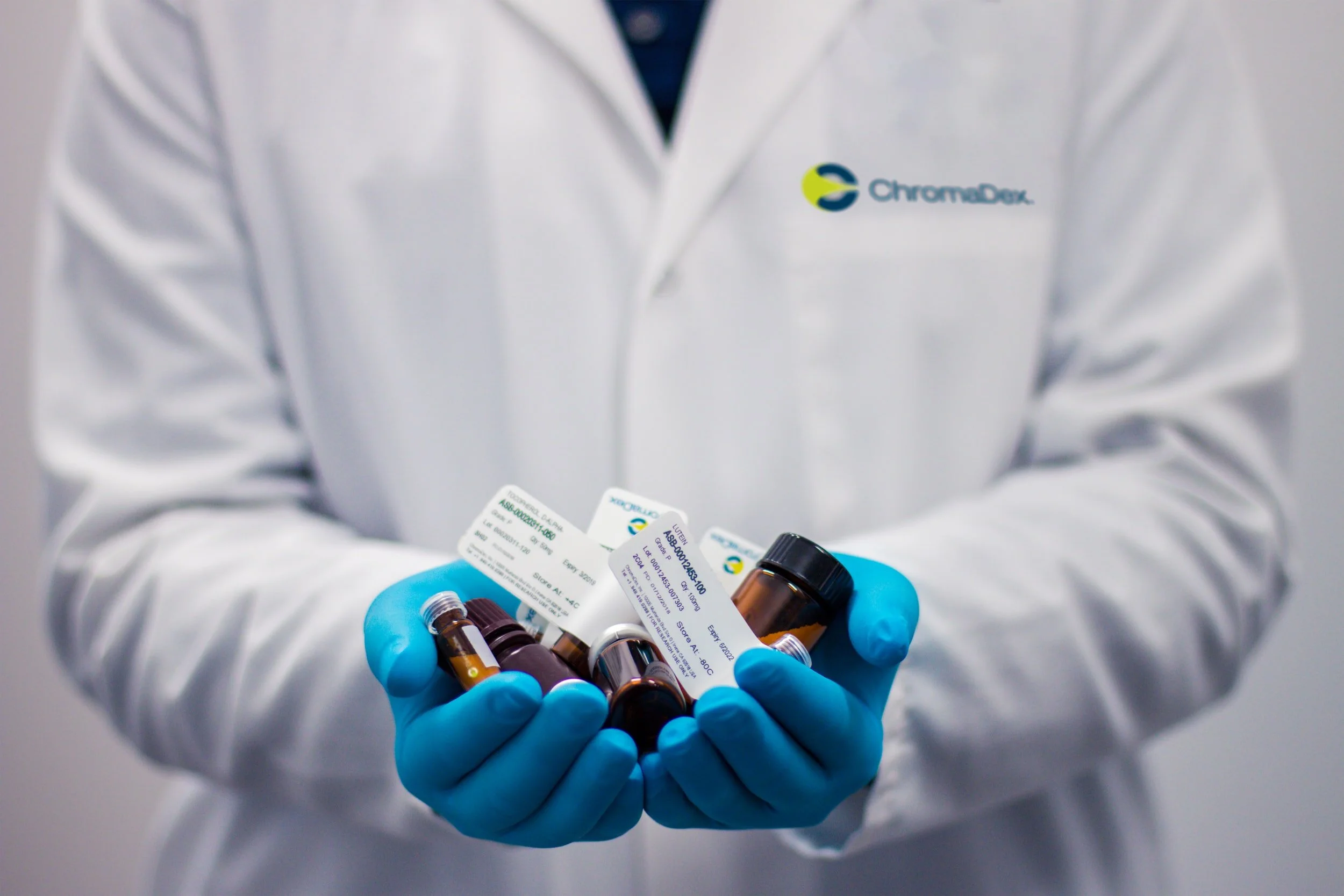
During a library talk last week, I spoke on the topic of Health Literacy. The day I was scheduled to present, I found myself dealing with a real-life example with a patient of why having a good grasp on health literacy is so critical to healthy aging. During our visit, I realized my patient had been taking double the dose of her prescribed medication - not out of any error on her part, but because she had two prescriptions on file for the same medication, one for the generic version, and one for the brand name - and she was unaware they were the same drug. How does this happen? How does it get by so many layers of well-meaning and conscientious health care professionals and hospital settings? Unfortunately, this stuff happens, and happens all too often, because there are a lot of ‘cooks in the kitchen’ and because all of us ‘cooks’ are human and we make mistakes. But this, this is why it is so imperative for you as the consumer, as the patient, to have an adequate level of health literacy - so you can be your own advocate, so you can be on the lookout for these human errors and so you can play an active, instead of passive, role in your own health maintenance.
During a library talk last week, I spoke on the topic of Health Literacy. As life would have it, the day I was scheduled to present, I found myself dealing with a real-life example with a patient of why having a good grasp on health literacy is so critical to healthy aging. During our visit, I realized my patient had been taking double the dose of her prescribed medication - not out of any error on her part, but because she had two prescriptions on file for the same medication, one for the generic version, and one for the brand name - and she was unaware they were the same drug. How does this happen? How did this get by so many layers of well-meaning and conscientious health care professionals and hospital settings? Unfortunately, this stuff happens, and happens all too often, because there are a lot of ‘cooks in the kitchen’ and because all of us ‘cooks’ are human and we make mistakes. But this, this is why it is so imperative for you as the consumer, as the patient, to have an adequate level of health literacy - so you can be your own advocate, so you can be on the lookout for medical errors and so you can play an active, instead of passive, role in your own health maintenance.
What is Health Literacy?
“Health literacy is the ability to obtain, read, understand and use healthcare information in order to make appropriate health decisions and follow instructions for treatment.” (Wikipedia).
Sounds simple enough, right? It may be simple enough if you have one or maybe two medical diagnoses, or take a pill or two in the morning. But what happens when the list starts to add up? When you’re taking pills in the morning, a few after lunch and one before bed? When the instructions come from more than just your primary care physician, but also from your cardiologist or neurologist? If you’ve ever been discharged from the hospital, you’ve had the experience of being issued a stack of papers to sign with discharge recommendations, red flags to be aware of, with a current medication list (which may have new pills or have old pills crossed off) and visits you’ll need to attend in the future. This experience alone is overwhelming. Add in confusion, fatigue, pain or anxiety related to your hospital stay and you now have a recipe for disaster. It is REALLY HARD to keep track of it all, and even harder to keep up with the changes that are often part of getting older and dealing with chronic diseases, new diagnoses, illnesses and injuries.
How do you know if you are adequately health literate?
You may be responsible for not only your health information management, but also for a spouse or aging parent.
At the minimum, to be health-literate, you should have a solid grasp on the following:
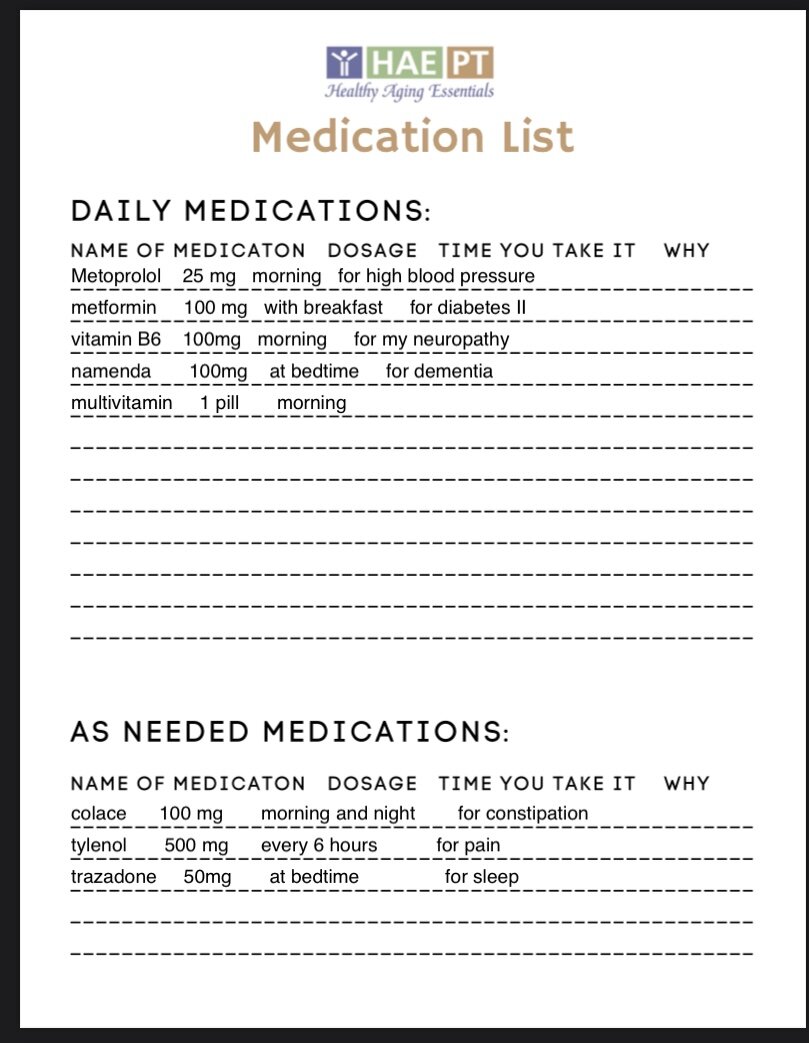
Your Medication List:
Daily Medications: Not just what you take, but how (by mouth, with food, on an empty stomach etc), how much (dosage and frequency), when you take it and most importantly, why. Is it to manage hypertension or your diabetes? What are the side effects you should be aware of? What should you do if you miss a dose? What if you take too many accidentally? It is helpful to know what the pill usually looks like, whether you take a generic or a brand and if you have a preference between the two.
As-needed or ‘PRN’ medications: What do you have on the list that you only take when you need it? For what reasons do you take this medication, and for how long? Do you need keep these on you, like a rescue inhaler or Nitro, or can you put them away somewhere for now to keep them out of the way?
Vitamins, supplements, inhalers, lotions, ointments and eye drops: These matter too! Make sure your physician knows any ‘extras’ you take because these, also, may interact with other medications on your list.
Allergies, Precautions and Dietary Considerations:
Allergies: Are you allergic to any foods or medications? What is your action plan if you experience an allergic reaction? Do you keep rescue medications on you at all times? Are they active and non-expired?
Precautions: Do you have any health conditions that require you to follow certain guidelines? Frequently, after a joint replacement or back surgery, your surgeon will ask you to follow certain rules to protect your healing tissues. Do you need to keep following these after you’ve healed or is it okay to resume your normal activities? Do you have any heart conditions that require you to keep your heart rate within certain ranges, or avoid drinking over a certain level of fluid each day?
Dietary Considerations: Are there any foods you need to avoid eating with your medications? Are there any dietary habits you should maintain to manage your chronic medical conditions? Believe it or not, even certain healthy foods can affect your medications if you are on a blood thinner (leafy greens and other foods high in Vitamin K are a no-no) and if you take medications like Levodopa to manage Parkinson’s, you’ll need to avoid taking them at the same time as protein or your body won’t digest the medication properly. Diabetics need to maintain a careful diet balancing sugar intake with insulin levels, and anyone with hypertension or congestive heart failure needs to be mindful of sodium intake. Dietary considerations vary from person to person - and you may have a number of conditions with contradicting guidelines, so having a conversation with a dietician may be a good place to start.

Current and Past Medical History:
Current Medical Problems: What conditions do you have that require ongoing medical management? Keep in mind, If you are taking a medication which adequately manages your medical condition, it doesn’t mean you no longer have it. For example. if you take a blood pressure medication, and no longer have high blood pressure because of it, it doesn’t mean you should take hypertension off of your current medical problem list. Any medical condition for which you either take a medication, monitor with a physician or manage through diet or exercise should remain on your current medical problem list. For each item on your list, you should be aware of which physician is responsible for management, which medications, if any, you take to manage it, and if there are any diet or exercise modifications you follow to keep it under control or from progressing. You should also be aware of any yellow or red flags that might indicate you may need medical attention. For example, if you have Congestive Heart Failure, you should know the name and number of your cardiologist, which medications you take to keep manage your fluid levels and blood pressure, how much water you are allowed to drink each day, and what signs or symptoms indicate you may be heading for an exacerbation like increased weight gain, shortness or breath or swelling in your ankles.
Past Medical History: This is the place for resolved or inactive medical problems you’ve experienced in the past. Things like an old knee replacement, appendicitis surgery or the time you had a UTI. Anything you place this list should not require ongoing management and should not cause any symptoms at this time.

Family and Caregiver Contacts, Health Care Team and Advance Directives:
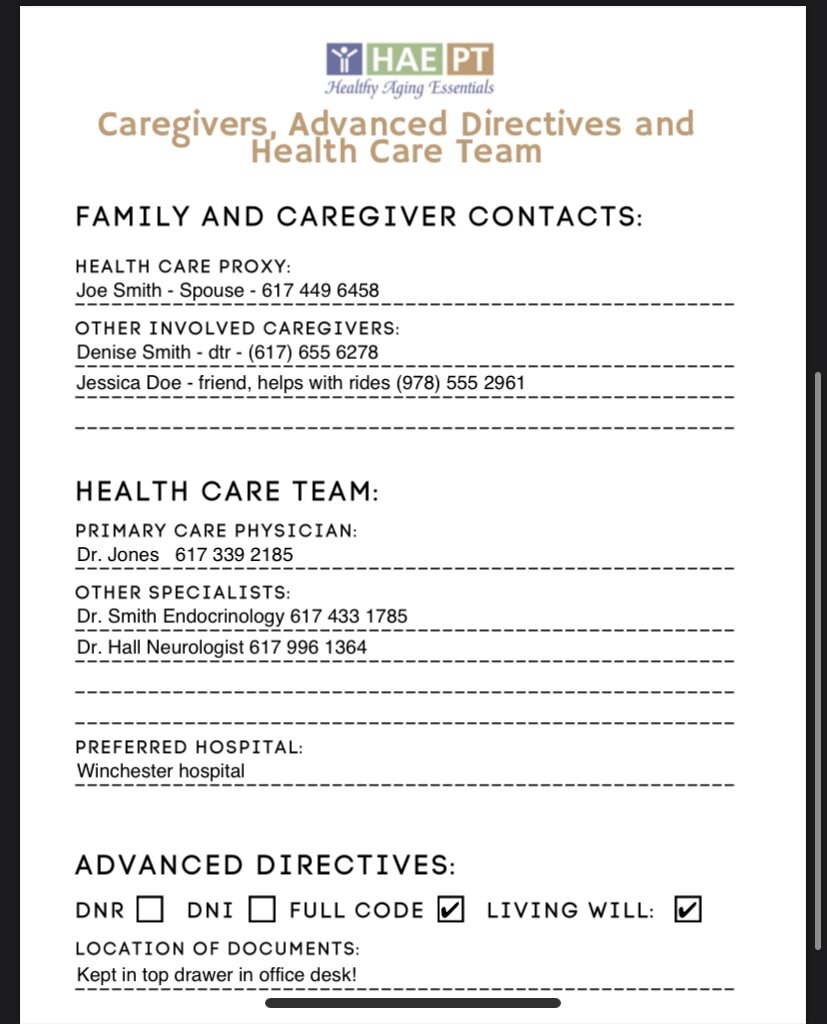
Family, Caregivers and Health Care Proxy: Who are your ‘people?’ If something goes wrong, or you rely on family or friends for help, who do you call? Who is your designated health care proxy? Keeping an active list, with current phone numbers for best contact, is a good habit and can help your healthcare team considerably if they need to reach out to someone who can help you.
Health Care Team: Who is your primary care physician and what specialists do you see to manage any chronic medical conditions? Do you have a preferred hospital or hospital network if you need to access emergent care? Is there a skilled nursing facility or acute rehab you’ve used in the past and had a good experience with? You may not always be given a choice, but generally paramedics will ask where you want to go, if they have the time to give you a choice.
Advanced Directives: What do you want someone to do if you have an emergency? Have you signed any advanced directives stating you do not want to be resuscitated in the event that your heart stops beating (DNR) or if you do not want to be intubated if you need assistance breathing (DNI)? Do you have a current Living Will in your home that further elaborates on your wishes if you are unable to provide them yourself? These forms are often signed during hospital stays and then forgotten about. Sometimes your wishes change. It is IMPERATIVE that you know what your wishes are, have them clearly stated in legal forms and have them accessible to the people who need to see them, when they need to see them. I recommend anyone who has an active DNR or DNI signed to post these on your refrigerator. This is the first place an EMT or other first responder will look if they come to your home and find you unresponsive. If it is not clear in your medical record or visible in line of sight, you will be resuscitated as if you were ‘full code’ and wanted to be saved. If you have a Living Will or other legal record, you should know where these are kept and have copies easily accessible for you or your loved one to find quickly if needed.
Signs of Poor Health Literacy
If you read through the above and felt like you had a handle on all of these issues, great! You’re well on your way to being adequately health-literate. It is a good idea to keep written records of all of the above, in an easy to spot location, as the last thing you or your loved one wants to do in an emergency is having to go searching through piles of paperwork. Still not sure how you rack up? Here are six other common signs of poor health literacy:
Frequent hospital admissions.
2. Poor management of chronic health conditions.
3. Forgetting medical appointments or missing regular follow up visits.
4. Trouble filling out health forms and past medical histories.
5. Frequent trouble with medications, like missing doses or running out of your pills too early.
6. Feelings of frustration with doctors, nurses and other healthcare workers.
If I now have you completely freaked out, fear not. There are easy ways to improve your health literacy and in turn, your overall health maintenance.
Tips to Improve Your Health Literacy
Ask questions and write down or record answers during your medical visits. Use your phone to take videos or auditory recordings so you can review them later if you need any clarification. Don’t be afraid to ask if you can repeat back what you think you heard so your healthcare team knows you've’ understood correctly.
Keep written health records on you or in easy-to-find locations. You should keep records of all the items above so you can easily provide them to EMTs, physicians or other members of your health care team if they need them. While most information is available online, keeping a hard copy will help you make sure you understand everything on ‘your list’ and remind you to ask about anything you don’t. Need an easy set of forms to keep it all organized? Check the HAE Store for a printable PDF of all the items above.
Use pill organizers or dispensers or utilize pharmacy pill packs. Pills get confusing! Make sure you have a system in place to make sure you take them at the right time - and a way to identify if you didn’t. Use phone timers and other reminders to cue you take pills when they’re scheduled.
Know what each medication you take is for and what common, or critical, side effects may be. If you have medication on your list, make sure you know why. What medical problem is it treating? Sometimes medications are prescribed for something years ago and may simply get ‘stuck’ there and may no longer be necessary. Ask questions of your physician, your pharmacist, or look them up online.
Be open and honest with your providers. Don’t be afraid to tell them how you feel, don’t be afraid of ‘being a pain,’ and if you feel like you can be open with your physician or other member of your healthcare team, it is time to find a new one. We can’t help you if we don’t know what’s going on.
Bring a trusted friend, family member or your health care proxy with you to your appointments. Whether they are there for emotional support, logistical support or to take notes for you, a second set of ears may not only be helpful, but necessary. If they can’t make it into the visit with you, ask if they can ‘Zoom’ or be there virtually.
Do you need some help organizing your medical information? You can download the forms I use to help my own patients organize their health information and medical histories at the HAE Patient and Therapist Store here:
Have an (Exercise) Snack..
If you’ve met me, been treated by me or ever visited my social media, you’re probably already aware that I strongly believe that Exercise is Medicine and that every adult should strive to meet the recommended 150-300 minutes a week of moderate intense exercise to prevent disease and better manage chronic conditions. However, only 1 of every 3 American Adults meet this recommendation, the rest, achieving less than that recommended dosage on a regular basis and placing themselves at increased risk for cardiovascular disease, diabetes and more.
A new study, published by Preventative Medicine Reports looks at a new approach to encouraging regular exercise in older adults. Given many older adults cite lack of time as a prohibiting factor, this study looked at prescribing exercise ‘snacks’ or small bouts of regular exercise every day. Participants in this study completed one minute of functional exercise (30 seconds of body-weight push ups and 30 seconds of squats), each and every day for 24 weeks. 75% of these of this group completed at least half of the sessions, and as a group, significant improvements were noted at the end of the trial in maximal push-up and squat performance.
You can read this study in it’s entirety here:
Take-home message? Even a little effort can yield positive results. Every day, I work with people limited by pain, disability and fear. Issuing an exercise program, and expecting compliance, to an older adult who hasn’t participated in regular exercise since they were young or who associates exercise with pain, fatigue or fall risk is one of the biggest challenges faced by Physical Therapists on a daily basis.
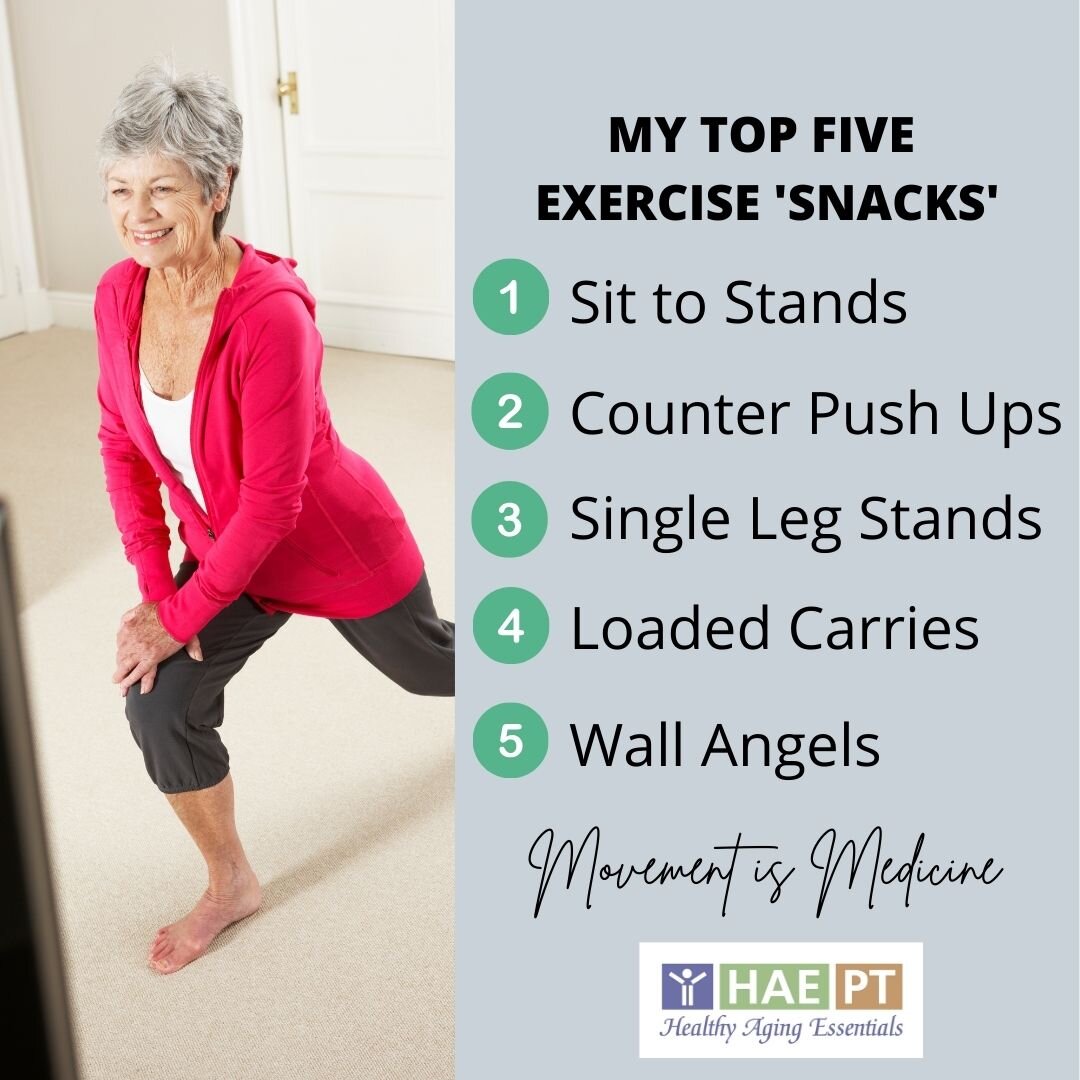
I frequently apply this idea of exercise ‘snacks’ to my patients, to help them gradually adjust to a more active lifestyle and too help them learn to see that exercise doesn’t have to be painful, exhausting or scary. I try to link these small bouts of exercise with everyday habits to make remembering to exercise second nature, and improve compliance. Whether you’re older and trying to get more active, or a therapist or other healthcare professional trying to help your client become healthier, you can try my top five favorite exercise snacks to get the ball rolling.
Sit to Stands - Every time you stand up off a chair, do it 5 times instead.
Counter Push Ups - Every time you walk by the kitchen sink, do 10 Counter Push Ups.
Single Leg Stand - Every time you brush your teeth, try to stand on one leg as long as you can.
Loaded Carries - After each meal, carry a soup cans in each hand and walk 5 laps back and forth across the kitchen.
Wall Angels - Put a post it note on a spot in the hallway and every time you pass it, perform 5 Wall Angels.
#haept #stronger #fitter #functional #physicaltherapist #physiotherapist #physicaltherapy #physiotherapy #doctorofphysicaltherapy #exercise #health #wellness #aging #healthyaging #optimalaging #successfulaging #exerciseismedicine #functionalstrength #balance #fallprevention #strengthtraining #freetalks #knowledgeispower #exercisesnacks

Happy New Year - and the Rule of Fives
I’ve gone back and forth what to post all day. Do I do the thing ‘I’m supposed to do’ and post a nice ‘Happy New Year you graphic? Do I write about how guilty I feel thinking about expressing gratitude to have made it through this year relatively scratch-free, when I’ve seen so many friends struggle with loss this year? Do I sit back and make Big Goals and Resolutions then share them with the world? (The possibilities are endless..)

I’ve gone back and forth what to post all day. Do I do the thing ‘I’m supposed to do’ and post a nice ‘Happy New Year you graphic? Do I write about how guilty I feel thinking about expressing gratitude to have made it through this year relatively scratch-free, when I’ve seen so many friends struggle with loss this year? Do I sit back and make Big Goals and Resolutions then share them with the world? (The possibilities are endless..)
When it comes down to it, we’ve all been changed by this year. Our children have been changed this year. The entire world we lived in has changed and I don’t know if will ever be the same.
But there can be goodness in change. There can be silver linings and lessons learned. There can be redirection and new purpose and path-righting.
I don’t have it all together, but I strive to keep most of it together, some of the time:) I took a huge leap this year snd am literally still figuring things out, as I go, every single day.
One thing I do know is I can’t thrive, and my business can’t thrive, and my family can’t thrive, if I don’t take care of myself first.
Have I been perfect this year? Nope. Have I tried my best to eat healthy and stay active despite all this chaos? Yes, for sure. Could I do better. Absolutely.
As a physical therapist, and a human, I can attest that the first step in achieving any of your goals, is caring for your body. Putting good things in, keeping bad things out. Keeping it moving snd active.
Should I make business goals and other more concrete resolutions? Probably. (It’s on my to-do list. Don’t judge:) ) But, I have decided, that all that ‘stuff’ needs to comes after this: my rule of FIVES - five things I think i can commit to that will make me a healthier person. This stuff isn’t earth shattering, and it isn’t even that hard. But it’s the stuff that matters and the things that WORK.
I, for one, am looking forward to 2021. This year turned our lives upside down, tossed our kids out of their schools and little kid worlds. It tossed everything into a giant socially-isolated quarantine bowl and spun it around. We, like all of you, have found a new way to live, to get through, to change and persevere in a new, very bizarre pandemic-world. I’ll use these five rules to center myself, keep focused on my health first and seek consistency in a totally-inconsistent world.
I wish for all of you a year of health, happiness and growth. I hope we can celebrate, instead of seclude, this time next year. And I hope we can take all the lessons and silver linings from this year and hold them close even after Covid is a thought far in the rear view.
Happy 2021, Katie

Deep Thoughts at the Dentist
Guys I have a confession to make…
I haven’t been to the dentist in over a year. Between Covid-related closures and life, it just didn’t happen. But I went this morning, and am so glad I did. And it got me thinking about a few things.

Guys I have a confession to make…
I haven’t been to the dentist in over a year. Between Covid-related closures and life, it just didn’t happen. But I went this morning, and am so glad I did. And it got me thinking about a few things.
Leading up to my appointment, I found myself having apprehensive thoughts, like dreading the visit in fear I’d be told I have seventeen cavities and need a root canal because I missed my regular visit. I considered cancelling and waiting till the Covid-risk is lower. But, fortunately, I had the insight to realize that when it comes to your health, Ignorance ISN’T bliss and I made it to my 9am at the Future of Dentistry - Wakefield (shout out for a super-clean, comfortable experience this morning!
When we avoid facing a reality out of fear, it doesn’t make that reality magically disappear. And when it comes to caring for your body and your health (and in this case, my teeth!), what may seem innocent enough, like postponing regular healthcare prevention visits, can actually make the problem worse!
So back to my teeth. Did you know that good oral hygiene is about more than pearly whites and avoiding the pain and nuisance of a filling? Oral health not only affects your mouth, but can cause other, bigger, health problems. Bacteria living in your mouth can travel, impacting other systems, like your heart and lungs. Poor oral hygiene can increase your risk of endocarditis (an infection in the lining of your heart), cardiovascular disease and pneumonia.
As a Physical Therapist, I’d 100% rather see a patient BEFORE they have a problem, than work with them to fix it after. Unfortunately, our healthcare system historically promotes rehabilitation and medical management over prevention. While there has been some within the physician treatment model to do better in this area, this hasn’t trickled down as much as I’d like to see within the practice of Physical Therapy. We, as a profession, have so much to offer in the realm of PREVENTION and it is my hope, that in 2021, payers like Medicare and other Managed Plans begin to see this, and offer better reimbursement for visits designed to address issues before they arise.
In the meantime, you have a choice. You can CHOOSE prevention. You can CHOOSE to put healthy things in your body, keep unhealthy things out, and to make exercise a regular part of your health maintenance (just like taking vitamins or seeing your primary care physician regularly). You can even CHOOSE to see a Physical Therapist before problems arise. PT’s like HAE offer Annual Physicals, just like your physician, and can help you take a clear and comprehensive look at your current health, your health behaviors and help you construct a plan that will set you on a path towards Healthy Aging.
“When you have to make a choice and don’t make it, that is in itself a choice.” -William James
So, as we turn the corner to 2021 (Good riddance, 2020…), let’s do some thinking. How could we treat our bodies better this year? 2020 has not been easy on any of us, and our collective health has suffered as a result. What problems could we choose to face, head on, instead of ignore, as we enter the new year?
If you like the idea of a Physical Therapy Annual Check-Up, and think it could help you start 2021 on the right track, call me:) I’m more than happy to help.
#haept #stronger #fitter #functional #physicaltherapist #physiotherapist #physicaltherapy #physiotherapy #exercise #health #wellness #aging #healthyaging #optimalaging #successfulaging #exerciseismedicine #insurance #medicare #momboss #annualcheckup #prevention #rehabilitation
Diabetes 101
Diabetes is the 7th leading cause of death in the United States, and the numbers of people living with Diabetes are increasing. Since I’ve been alive (I’m under 40, but over 35 for those of you wondering..), the number of cases of diabetes have QUADRUPLED. Trends project that by 2050, 1 out of ever 3 American adults will have Diabetes.

November is National Diabetes Awareness Month. To do my part, I’ve been sharing information each week about Diabetes - symptoms, causes, impact on the body and most importantly, about prevention. To wrap up the month, I’m putting it all together here on the website, in Diabetes 101.
Diabetes 101
Diabetes is the 7th leading cause of death in the United States, and the numbers of people living with Diabetes are increasing. Since I’ve been alive (I’m under 40, but over 35 for those of you wondering..), the number of cases of diabetes have QUADRUPLED. Trends project that by 2050, 1 out of ever 3 American adults will have Diabetes.
While there are different types of Diabetes, the vast majority, 90-95%, have Type 2. While Type 2 Diabetes does have some genetic component, this is a preventable type of Diabetes. And for the folks in the back - THIS IS A PREVENTABLE DISEASE! Not only is it preventable, but people typically are often made aware by their doctors that they are developing it, and there are concrete ways to reverse course and normalize your blood sugar regulation to prevent progression to full course diabetes. Of the 86 million adults in the United States who are prediabetic, 15-30% will go on to develop full Type 2 Diabetes within 5 years. The key to prevention? Changing your habits and lifestyle to foster healthy eating habits, weight management and regular physical activity, But before I go on, and on and on, about the benefits of physical activity (have you heard this one before?), here is a quick primer on Diabetes.
Diabetes Is:
Diabetes is: a group of metabolic diseases that cause unmitigated blood sugar (hyperglycemia). While the body relies on sugar for energy production, too much free floating, unstored sugar, can wreak havoc and cause damage and dysfunction, and eventual failure, of organs throughout the body. Diabetes most commonly affects the eyes, kidneys, nerves, heart and blood vessels. Long term effects of Diabetes can include:
Retinopathy
Nephropathy
Peripheral Neuropathy (leading to skin breakdown, foot ulcers and often amputations)
Autonomic Neuropathy (leading to gastrointestinal, genitourinary and cardiac symptoms)
Atherosclerosis
Cardiac Artery Disease
Peripheral Artery Disease
Cerebrovascular Disease
Hypertension
Abnormal Lipid Metabolism
There are a few different types of Diabetes. Type 1, or what used to be referred to as Juvenile Diabetes, is not preventable. This form is an autoimmune disorder where the body attacks the insulin-producing Beta cells in the pancreas, thereby preventing insulin formation. Without insulin, the body cannot break down sugar effectively leading to diabetes. People with Type 1 Diabetes rely on careful diet and exogenous insulin (injections) to manage their blood sugar, and while healthy diet and exercise is still important for someone with Type 1, it will not prevent Diabetes in this case. Type 1 Diabetes accounts for about 5% of Diabetic cases.
Type 2 on the other hand, develops over time, most frequently as a result of lifestyle choices. In the case of Type 2 Diabetes, insulin deficiency is relative, and due instead to insulin resistance. Between overexposure to sugary foods and carbohydrates, and lack of physical activity, more and more insulin must be produced to have the same effect, leading the body to become less sensitive to this hormone and leading to this state of insulin resistance. While Type 2 Diabetics may require pharmacological management (medications that improve insulin sensitivity) or exogenous insulin (injections), many can manage their disease with diet and exercise alone.
Symptom Presentation:
Whether you are experiencing Type 1 or Type 2 Diabetes, the symptoms that you experience are a result of either blood sugar that is too low (hypoglycemia) or too high (hyperglycemia). Symptoms of hypoglycemia include hunger, nervousness, shakiness, perspiration, dizziness, lightheadedness, sleepiness and confusion. Symptoms of hyperglycemia include frequent urination, increased thirst, sweet smelling breath and when progressed too far, ketoacidosis and coma. Initial signs of Diabetes can be a mix of these. Typically, the first signs of Diabetes include:
Blurred vision
Polyuria (Increased Urination) and Nocturia (nightime urination)
Neuropathy (pain, tingling and numbness in hands and feet)
High blood prssure
Fatigue
Confusion
Itchy, dry skin
Slow healing wounds and recurrent infections
Diagnosis:
So how do you know if you are diabetic? There are two primary tests used to screen for, and diagnose Diabetes. Most commonly, if you are at risk or over a certain age, your primary care physician will order an A1C check. This provides an average of your blood sugars over the prior 2-3 month period. A normal value is under 5.7%; a prediabetic reading falls between 5.7 and 6.4%; and a test over 6.5% indicates Diabetes. If you have fasted, your doctor may take fasting blood sugar reading. This reflects your blood sugar, at the current place in time and results under 100 mg/dl indicate you fall in the normal range. Results between 100-125 mg/dl indicate you are prediabetic, and values over 126 mg/dl indicate Diabetes.
Concerned you may be at risk? There is a great resource available on the American Diabetes Association Website that helps you calculate your risk of developing this disease. You can access it here:
When in doubt, simply ask your doctor at your next visit about your risk of Diabetes, and what you can do to prevent it.
Prevention and Management:
Whether you find yourself at risk, diagnosed with Prediabetes or living with Type 2, lifestyle intervention can prevent or stop the progression of this disease. There are three keys to the prevention of Diabetes: Weight Management, Healthy Diet and Physical Activity.
While focusing on a healthy diet is important for everyone, weight management is a particularly important step for people who are overweight or obese. Eating a balanced, healthy diet, while increasing activity and energy expenditure should help to balance out your energy intake and improve your weight management. While I won’t go into too much detail here, the important thing is to identify if this is an issue for you and if so, seek support. A nutritionist, diabetic educator or the Dietary Guidelines for Americans are all great places to start. Choose My Plate.gov offers great online tools you can access here:
I will, however, go into more detail about physical activity. If you’ve been on the HAE website before, I’m sure you’ve already heard that getting 150 minutes each week of moderately intense physical activity (plus strengthening twice a week) is incredibly beneficial and is THE most effective way to promote healthy aging. This is the same for Diabetes. Not only does regular physical activity help with weight management, but it lowers blood sugar, lowers cholesterol, improves blood pressure, and lowers stress, anxiety and improves mood. While counseling for patients found to be prediabetic includes encouraging increased physical activity, in my experience, there is a reason inactive people aren’t active in the first place. If it were that easy to simply start being active, chances are, they would have done it years ago. But pain, fear, inexperience, lack of time, lack of knowledge...these factors, unaddressed, are all barriers to exercise.
Role of Physical Therapy in Diabetic Prevention and Management:
Physical Therapists are physical activity and exercise experts. We are experts at finding ways for everyone, in every shape, to become ACTIVE, safely and effectively. Exercise and physical activity can be life changing. It can ward off depression, manage anxiety, improve sleep, prevent disease like heart disease and some cancers. And it can reverse prediabetes and PREVENT DIABETES.
Exercise lowers blood glucose and improves insulin sensitivity. It improves body composition and reduces adiposity (fat tissue), which when increased, is in itself a risk factor for development of Diabetes. It aids in weight management and makes you FEEL BETTER, and often, that alone, can help with making better food choices.
So, climbing off my soapbox: this was my long-winded way of saying, good grief, if you have been told you are prediabetic, or had an impaired fasting glucose reading, now is the time to get ACTIVE! And if you need help, ask a PT:)

In summary, Diabetes is a quickly growing problem in the US. However, for the vast majority, this is a preventable disease! Learn about it, make healthy choices and get active. Great resources exist on the internet (ADA), but as always, your primary care physician is the best place to start. Ask the questions, make the changes and get stronger, fitter and healthier!