Taking ‘OneStep’ Forward Towards Better Walking and Balance Outcomes
Written By: Dr. Katie Wadland, PT, DPT, Owner: Healthy Aging Physical Therapy
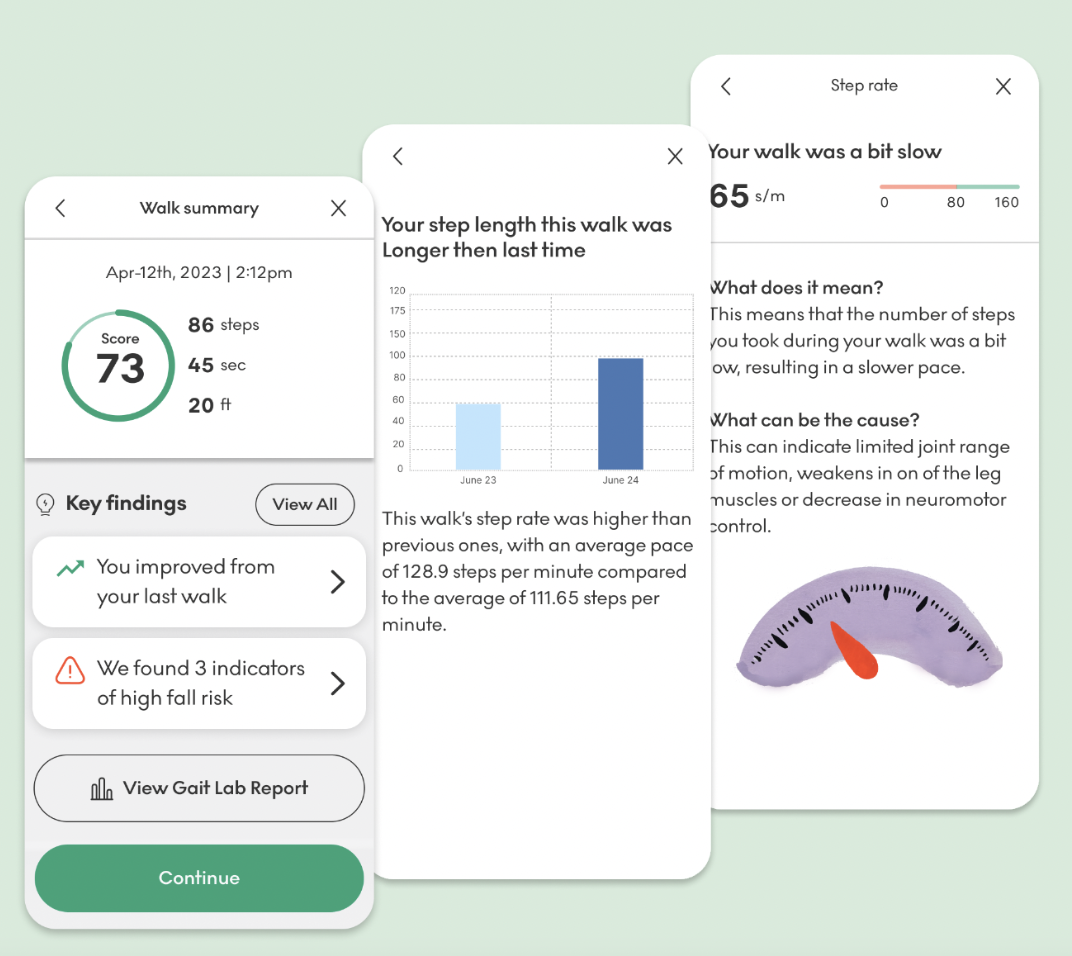
At Healthy Aging Physical Therapy, our mission is to deliver the most effective, evidence-based care available. That’s why we’re excited to introduce OneStep, a cutting-edge clinical gait analysis and remote monitoring platform we’ll begin offering to patients in February 2026. OneStep transforms a patient’s smartphone into a clinical-grade motion laboratory, allowing us to capture high-fidelity gait and mobility data both in clinic and in real-world environments using the device you already carry.
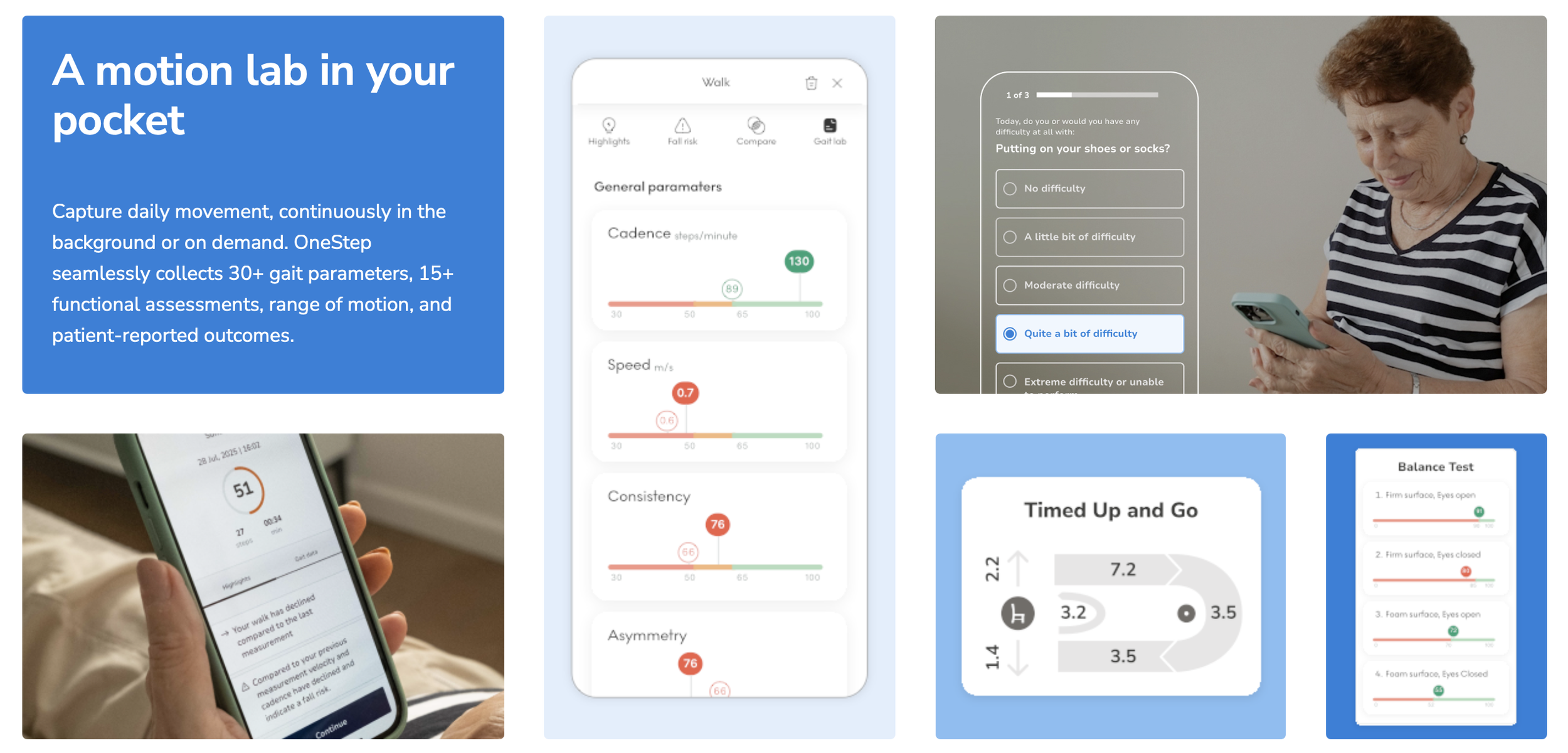
By simply putting a phone with our OneStep app in your pocket while you move around, we can:
Quantify walking speed, stride length, cadence, movement symmetry, variability, balance indicators, and other spatiotemporal gait metrics, all critical indicators of mobility and fall risk.
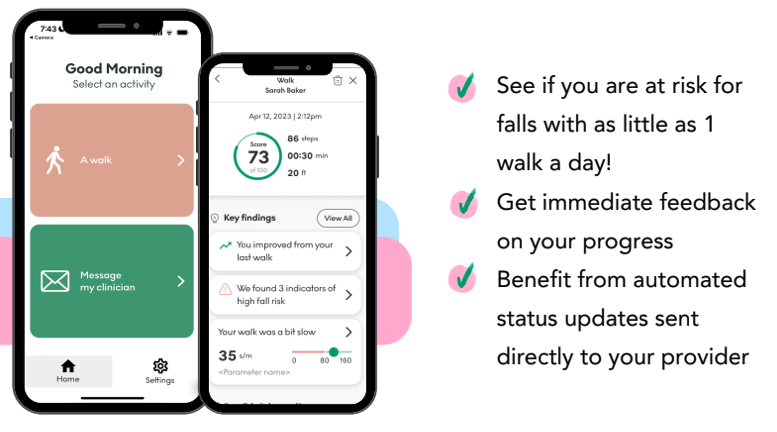
Detect fall risk and mobility decline earlier, enabling proactive adjustments to your care plan.
Monitor progress objectively and continuously throughout your plan of care - entirely remotely.
Improve patient engagement by showing concrete progress data rather than relying solely on subjective reports.
OneStep’s dashboard synthesizes movement into actionable clinical insights, helping your therapist tailor interventions based on quantitative evidence rather than estimation.
Evidence and Clinical Value
The scientific community increasingly recognizes gait, and particularly gait speed, as a key indicator of health. In fact, walking speed is referred to as the “sixth vital sign” because of its strong predictive value for functional decline, fall risk, future disability, hospitalization, and even longevity.
Beyond just “how fast” someone walks, gait characteristics reflect the integrated functioning of multiple physiological systems, including cardiovascular, neurological, and musculoskeletal health. Slower gait speed has been shown in multiple studies to correlate with increased risk of falls and adverse outcomes across older adult populations.
But Does it Work?
Peer-reviewed research has validated that smartphone-based gait analysis applications can provide reliable alternatives to traditional motion-laboratory measures and are feasible for evaluating gait dysfunction in clinical settings.
This supports our confidence that OneStep’s data is not just convenient, it is clinically meaningful and can augment traditional evaluation tools to give a fuller, real-world view of your mobility and fall risk.
Furthermore, OneStep’s own performance metrics (derived from aggregated real-world use) demonstrate its value:
The platform has analyzed tens of billions of steps and been used in mobility assessments for hundreds of thousands of patients, extracting 30+ gait and mobility parameters that clinicians rely on.
Organizational outcomes reported on OneStep’s platform include reductions in falls, improvements in patient engagement, and measurable time savings for clinicians, underscoring its operational as well as clinical impact.
Why This Matters to You
Traditional gait and balance assessments that we perform with you at home remain an essential part of your care. However, they are ultimately momentary snapshots of how you walk in that specific moment, often while your therapist is standing close by, observing, cueing, or providing supervision.
For many people, this setting does not fully reflect natural walking patterns. The presence of a clinician can unintentionally change how someone moves. Increased focus, heightened awareness, performance pressure, or a sense of being “watched” can lead to walking faster, more cautiously, or with more effort than usual. In some cases, people walk better than they typically do day to day; in others, they move more stiffly or guarded than normal.
As a result, what we see during a single assessment may not capture:
How you walk when you are relaxed and moving naturally
How fatigue, distraction, or multitasking affect your gait
How your walking changes throughout the day or across environments
Early signs of decline that emerge gradually rather than suddenly
By combining in-person clinical assessments with real-world gait monitoring, we gain a more complete and accurate picture of your mobility. This allows us to tailor your care not just to how you can walk when supervised, but to how you actually walk in daily life.
OneStep extends this model by providing:
Continuous monitoring across environments and times, capturing variations that might be missed in a single clinic visit.
Objective, quantifiable progress tracking instead of subjective impressions alone.
Early identification of decline or risk, allowing timely intervention before issues result in falls or functional loss.
This translates into more personalized care, more meaningful outcomes, and the ability to tailor interventions with precision.
Why Gait Matters for the Populations We Serve
While gait is a powerful health indicator across the lifespan, it is especially meaningful for the populations we work with every day. Subtle changes in walking patterns often appear before patients notice functional decline — and long before a fall, injury, or loss of independence occurs.
Older Adults
In older adults, gait speed, variability, and symmetry are strongly associated with:
Fall risk
Frailty progression
Loss of independence
Hospitalization and mortality risk
Even small reductions in gait speed (as little as 0.05–0.10 m/s) have been shown in research to represent clinically meaningful decline. Conversely, measurable improvements in gait speed correlate with improved survival and functional outcomes.
By tracking gait longitudinally, OneStep allows us to:
Identify early decline before it becomes a crisis
Distinguish “normal aging” from actionable impairment
Objectively measure improvement from strength, balance, and mobility interventions
Monitor mobility over time for patients on maintenance or wellness-based plans of care
For many older adults, gait truly reflects the intersection of strength, balance, endurance, cognition, and confidence.
Parkinson’s Disease and Other Neurologic Conditions
In Parkinson’s disease, gait is one of the most sensitive indicators of disease progression and functional impact. Changes in gait often include:
Reduced stride length
Shuffling or festination
Increased gait variability
Asymmetry
Freezing episodes
Reduced arm swing and trunk rotation
These changes can fluctuate day-to-day based on medication timing, fatigue, and environment — meaning they are often missed during brief clinic assessments.
With OneStep, we can:
Quantify changes in stride length, cadence, and variability over time
Monitor real-world walking, not just “best performance”
Identify subtle decline earlier and adjust interventions proactively
Better individualize cueing strategies, amplitude-based training, and balance work
Help monitor for changes in mobility related to medications, DBS and other therapies
This data supports more precise, responsive care, particularly for individuals living with Parkinson’s disease who benefit from long-term monitoring and early intervention.
Orthopedic Conditions
For patients with orthopedic concerns, including joint replacements, arthritis, spine conditions, or lower-extremity injuries, gait often compensates long before pain fully resolves.
Common gait-related issues include:
Asymmetrical loading
Reduced stance time on the involved limb
Altered cadence or step length
Persistent compensations that increase stress on other joints
OneStep allows us to:
Objectively assess symmetry and loading patterns
Track recovery beyond pain reduction alone
Ensure gait normalization, not just task completion
Identify lingering deficits that may increase reinjury risk
This helps ensure that “feeling better” also means moving better, reducing long-term wear and injury risk.
Balance and Vestibular Conditions
For patients with vestibular disorders or balance impairments, gait often reveals deficits that static balance tests do not.
Changes may include:
Increased gait variability
Slower walking speed
Widened base of support
Hesitancy or avoidance in real-world environments
Because balance confidence and sensory integration vary by environment, gait measured outside the clinic provides critical insight.
With OneStep, we can:
Assess dynamic balance during everyday walking
Monitor response to vestibular rehabilitation over time
Identify sway and movement during static balance assessments
Better tailor progression of dynamic balance and dual-task training
This allows us to move beyond symptom resolution toward true functional confidence and safety.
Want to Take ‘OneStep’ Closer to Better Walking and Balance With Us?
Beginning in February 2026, OneStep will be integrated into care at Healthy Aging Physical Therapy as part of our comprehensive assessment and treatment planning process.
During your evaluation or reassessment, your clinician may use OneStep to help measure and better understand your walking and balance. In some cases, we may ask you to download the OneStep app to your phone and use it as a way for us to track gait and mobility data over time during your plan of care - both in person and, when appropriate, remotely.
There is no additional cost to you for using OneStep during skilled physical therapy.
You can expect your clinician to:
Explain how OneStep works and how it uses your phone to measure walking
Review which gait and mobility metrics are relevant to your goals
Use this information to more precisely tailor your treatment plan and monitor progress or change over time
Interested in Gait Insights, but not a Current Patient?
If you’re interested in understanding your gait, balance, or fall risk, but are not in need of skilled physical therapy services, you may request a Wellness Evaluation through our Wellness365 Program. This allows you to experience OneStep, receive objective gait data, and gain professional insight into your movement patterns outside of an insurance-based plan of care. We will also be rolling a third tier in our Wellness365 program to allow for long term engagement with your therapist and ongoing monitoring of your gait, mobility and exercise program so stay tuned for more details!
Gait is more than movement - it is a vital signal of health. OneStep gives us a powerful, data-driven way to listen. If you have questions or would like to learn more, we’re happy to talk with you.

