

Healthy Aging Physical Therapy Monthly Blog
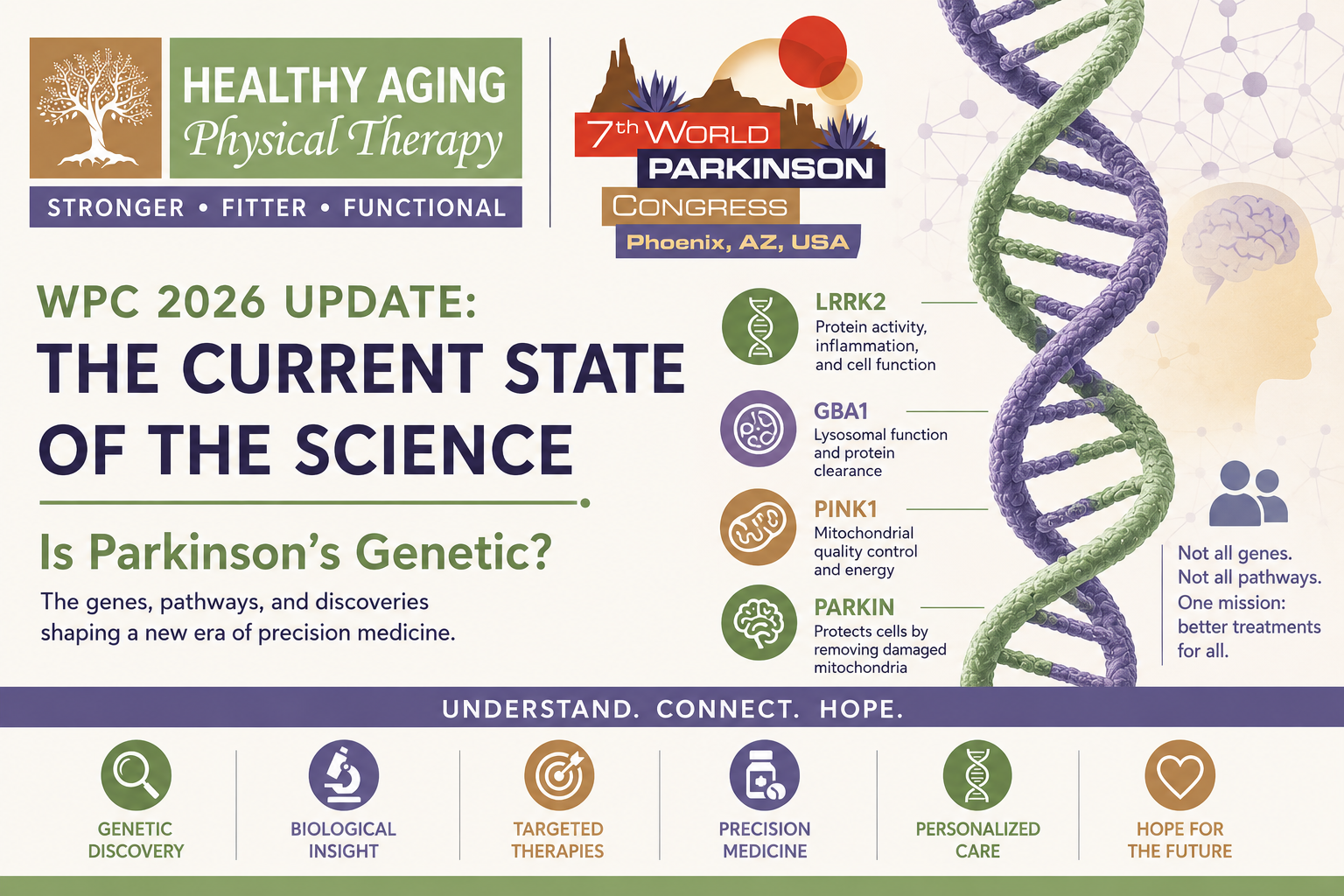
WPC 2026 Update: The Current State of the Science - Is Parkinson’s Genetic?
What scientists have learned about Parkinson's genes, why genetics matters even if you don't have a mutation, and how targeted therapies may help shape the future of treatment.
What scientists have learned about Parkinson's genes, why genetics matters even if you don't have a mutation, and how targeted therapies may help shape the future of treatment.
For many years, when patients asked whether Parkinson's disease was genetic, the answer was often simple:
"Most Parkinson's disease is not inherited."
While that statement isn't entirely wrong, it is becoming increasingly incomplete.
One of the strongest themes I heard repeatedly at the World Parkinson Congress was that genetics is transforming how researchers think about Parkinson's disease. Not because most people with Parkinson's have a genetic mutation—they don't—but because genetics is helping us understand the biological pathways that drive the disease itself.
In fact, some of the most exciting disease-modifying therapies currently being studied were developed because of discoveries made through genetic research.
The question is no longer simply:
"Is Parkinson's genetic?"
The more important question may be:
"What can genetics teach us about why Parkinson's develops in the first place?"
The Short Answer: Sometimes
Most people diagnosed with Parkinson's disease do not have a clearly identifiable inherited genetic mutation.
Researchers estimate that approximately 10–15% of Parkinson's cases have a known genetic component, while the majority are considered "idiopathic," meaning no single cause can be identified.
However, this distinction is becoming less clear.
Even when someone does not carry a known Parkinson's gene mutation, many of the biological pathways affected by genetic forms of Parkinson's appear to be disrupted in idiopathic Parkinson's disease as well.
This means genetic discoveries may ultimately help far more people than just those carrying specific mutations.
The Most Important Parkinson's Genes
Researchers have identified dozens of genes associated with Parkinson's disease risk, but a handful have emerged as particularly important because they appear to influence major biological pathways involved in disease progression.
The genes discussed most frequently throughout the conference included:
LRRK2
GBA1
PINK1
Parkin (PRKN)
Each tells us something different about how Parkinson's disease develops.
LRRK2: The Most Common Genetic Cause of Parkinson's Disease
Mutations in the LRRK2 gene represent the most common known genetic cause of Parkinson's disease.
Approximately 1–2% of all Parkinson's cases worldwide are linked to LRRK2 mutations, though rates are significantly higher in certain populations.
The LRRK2 protein plays important roles in cellular maintenance, lysosomal function, inflammation, and mitochondrial health.
At WPC, one researcher described abnormal LRRK2 activity as being:
"Like a bull in a china shop."
Instead of functioning normally, the mutated protein becomes overactive and may contribute to cellular damage over time.
Because of this, researchers have developed medications designed specifically to reduce LRRK2 activity.
Several major clinical trials are currently evaluating whether suppressing LRRK2 activity can slow disease progression.
While early results have been mixed, the field continues to view LRRK2 as one of the most promising precision medicine targets in Parkinson's disease.
GBA1: The Gene That Changed Everything
If there was one gene repeatedly mentioned throughout the conference, it was GBA1.
GBA1 mutations are among the most common genetic risk factors for Parkinson's disease.
Approximately 5–10% of people with Parkinson's disease carry a GBA1 variant.
The GBA1 gene produces an enzyme called glucocerebrosidase (often shortened to GCase).
This enzyme functions as part of the cell's waste-disposal and recycling system, known as the lysosome.
When GCase activity decreases, cells become less efficient at clearing damaged proteins and cellular debris.
This becomes particularly important because reduced GCase activity is associated with increased alpha-synuclein accumulation.
In other words, one of the major genetic pathways in Parkinson's disease appears directly connected to one of the major protein abnormalities discussed in the previous article.
Even more interesting, researchers now believe many people with idiopathic Parkinson's disease may also have reduced GCase activity despite not carrying a GBA1 mutation.
This is one reason GBA1 research has generated so much excitement.
Ambroxol: From Cough Medicine to Parkinson's Therapy
One of the most discussed GBA1 therapies at WPC was Ambroxol.
Originally developed as a cough medication, Ambroxol appears capable of increasing GCase activity and improving lysosomal function.
Researchers hope that by improving cellular waste disposal, Ambroxol may reduce alpha-synuclein accumulation and slow disease progression.
The ongoing ASPRO-PD Phase 3 trial is currently evaluating whether these biologic effects translate into meaningful clinical benefit.
The fact that a decades-old cough medication is now one of the most closely watched Parkinson's therapies highlights how rapidly the field is evolving.
PINK1 and Parkin: The Mitochondrial Connection
Two additional genes discussed frequently throughout the conference were PINK1 and Parkin.
These genes help regulate mitochondrial quality control.
Mitochondria are often described as the "power plants" of cells because they generate energy needed for cellular survival and function.
Dopamine-producing neurons have exceptionally high energy demands, making them particularly vulnerable to mitochondrial dysfunction.
Under normal circumstances, PINK1 and Parkin work together to identify damaged mitochondria and remove them before they can harm the cell.
When these systems fail, dysfunctional mitochondria accumulate, oxidative stress increases, and neurons become more vulnerable to degeneration.
One of the most important realizations emerging from modern Parkinson's research is that mitochondrial dysfunction appears to occur not only in people with PINK1 or Parkin mutations, but also in many individuals with idiopathic Parkinson's disease.
Again, a genetic discovery has helped uncover a broader biological process affecting many forms of Parkinson's disease.
Why Genetics Matters Even If You Don't Have a Mutation
One of the most important lessons from WPC was that Parkinson's genetics is no longer just about inheritance.
Genetics has become a roadmap for understanding disease biology.
Researchers are increasingly using genetic discoveries to identify:
Biological pathways involved in disease progression
New treatment targets
Potential biomarkers
Distinct Parkinson's subtypes
Precision medicine opportunities
Even if you never undergo genetic testing—or test negative for known mutations—the discoveries coming from genetic research may still influence future treatment options.
The Rise of Precision Medicine
Historically, Parkinson's disease treatment has largely followed a one-size-fits-all model.
Regardless of why someone developed Parkinson's disease, treatment approaches have been relatively similar.
That is beginning to change.
Researchers increasingly believe that Parkinson's disease may consist of multiple biologically distinct subtypes.
Some individuals may have disease driven primarily by alpha-synuclein accumulation.
Others may have stronger lysosomal dysfunction.
Others may demonstrate more prominent mitochondrial abnormalities or inflammatory processes.
This has led to a growing emphasis on precision medicine.
The goal is to match the right treatment to the right patient based on the biological mechanisms driving their disease.
Where Are Genetic Therapies Headed?
Many of today's most promising disease-modifying therapy trials are directly tied to genetic discoveries.
Researchers are currently investigating:
LRRK2 inhibitors
GBA1-targeted therapies
Lysosomal enhancers
Mitochondrial therapies
Gene therapies
RNA-based therapies
Precision medicine approaches guided by biomarkers and genetic testing
Some studies have produced encouraging results.
Others have failed to meet their primary endpoints.
But as several researchers emphasized throughout the conference, failed trials often teach us as much as successful ones.
The field continues to move forward rapidly.
The Bigger Picture
The most exciting thing about Parkinson's genetics may not be identifying who inherited a mutation.
It may be what those mutations are teaching us about the disease itself.
Genes such as LRRK2, GBA1, PINK1, and Parkin have opened windows into critical biological processes including protein clearance, mitochondrial health, inflammation, and cellular waste management.
These discoveries are helping researchers move beyond simply treating symptoms and toward therapies designed to address the underlying biology of Parkinson's disease.
And perhaps most importantly, they are helping reshape how we think about Parkinson's itself.
Rather than one disease with one cause and one treatment, Parkinson's increasingly appears to be a collection of overlapping biological pathways that may require different approaches for different people.
That shift—from symptom management toward biologically targeted precision medicine—may ultimately become one of the most important advances in Parkinson's research over the next decade.
Part 4: The New Way We Classify Parkinson's Disease
Why researchers are moving beyond symptom-based diagnosis toward biological staging systems, disease subtypes, and precision medicine.

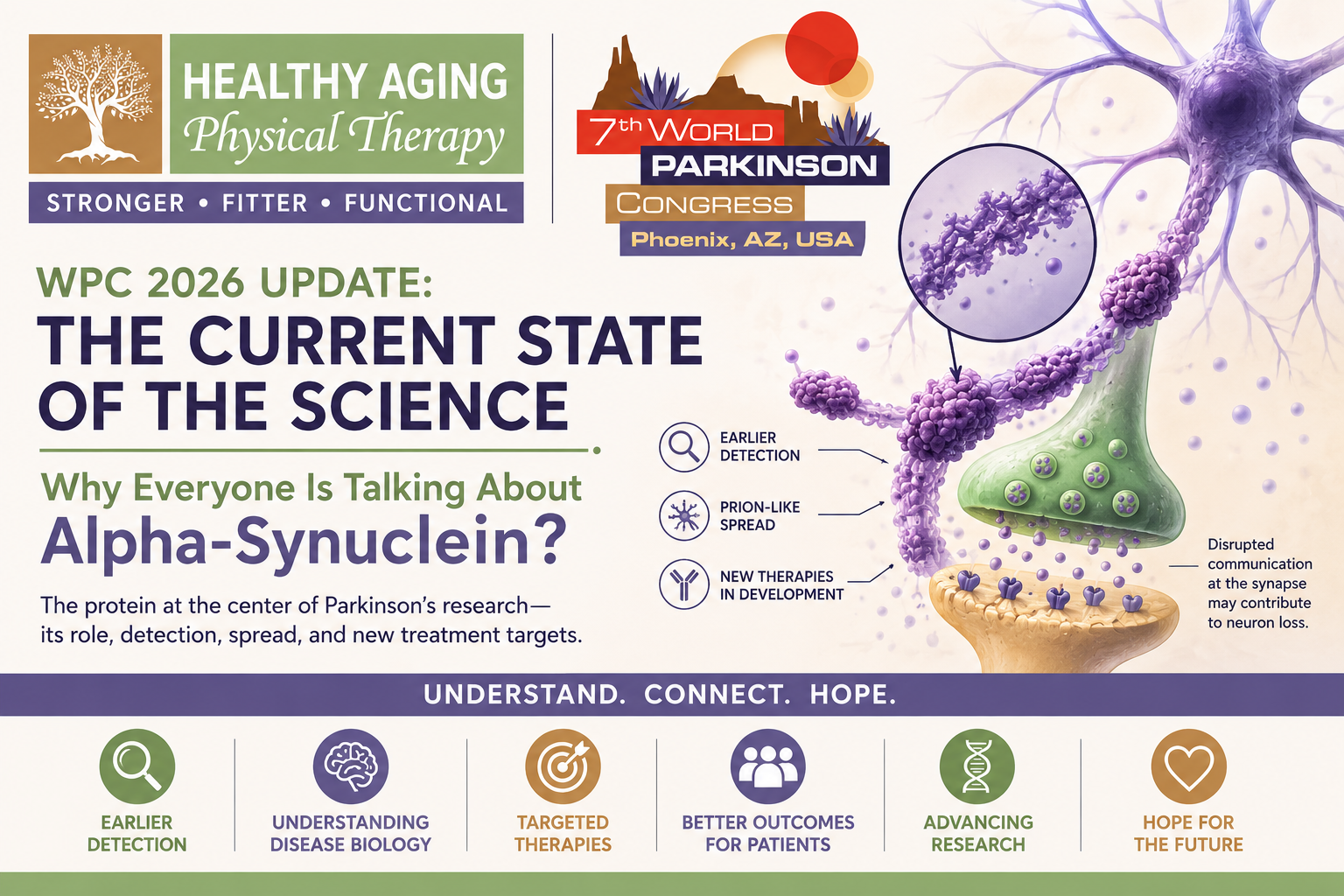
WPC 2026 Update: The Current State of the Science - Why Everyone Is Talking About Alpha-Synuclein?
What alpha-synuclein is, why it matters, how it may spread through the nervous system, and why researchers believe it could hold the key to earlier diagnosis and new treatments.
What alpha-synuclein is, why it matters, how it may spread through the nervous system, and why researchers believe it could hold the key to earlier diagnosis and new treatments.
If there was one scientific topic that seemed to appear in almost every lecture I attended at the World Parkinson Congress, it was alpha-synuclein.
Researchers discussed it in sessions on genetics. They discussed it in sessions on biomarkers. They discussed it in sessions on disease-modifying therapies, early diagnosis, neuroinflammation, and precision medicine.
In many ways, alpha-synuclein has become the center of modern Parkinson's disease research.
But what exactly is it, and why is everyone so interested in it?
The answer is both fascinating and surprisingly complicated.
First, What Is Alpha-Synuclein?
Alpha-synuclein is a protein that naturally exists in the brain and nervous system. In fact, it is one of the most abundant proteins found in neurons.
For many years, scientists didn't fully understand what it did. We now know that alpha-synuclein plays important roles in communication between nerve cells.
Specifically, it helps regulate the release and recycling of neurotransmitters—the chemical messengers that allow one nerve cell to communicate with another.
You can think of alpha-synuclein as one of the many workers helping to keep communication flowing smoothly at the synapse, the tiny gap where neurons exchange information.
In a healthy brain, alpha-synuclein appears to help organize synaptic activity, support dopamine signaling, and maintain efficient communication between neurons.
In other words, alpha-synuclein is not inherently "bad." It is a normal and important part of brain function.
What Happens in Parkinson's Disease?
The problem begins when alpha-synuclein changes shape.
Proteins must fold into specific three-dimensional structures to function properly. In Parkinson's disease, alpha-synuclein can misfold and begin sticking to other alpha-synuclein proteins.
Over time, these misfolded proteins clump together and form aggregates.
Eventually, these aggregates contribute to the formation of Lewy bodies—the abnormal protein deposits that are considered one of the hallmark pathological features of Parkinson's disease.
Researchers believe these protein clumps interfere with normal cellular function in several ways.
They may disrupt communication between neurons, interfere with cellular waste disposal systems, impair mitochondrial function, trigger inflammation, and contribute to eventual neuronal death.
Importantly, alpha-synuclein aggregation doesn't appear to affect only dopamine-producing neurons. It has been found throughout multiple regions of the nervous system, helping explain why Parkinson's disease involves much more than tremor and movement symptoms.
Does Alpha-Synuclein Spread?
One of the most intriguing theories discussed at the conference was the idea that alpha-synuclein may spread through the nervous system in a "prion-like" manner.
Prions are abnormal proteins capable of causing other proteins to misfold.
Researchers now believe misfolded alpha-synuclein may behave somewhat similarly.
The theory suggests that once one alpha-synuclein protein misfolds, it may encourage neighboring proteins to misfold as well. Those proteins may then spread to nearby cells and continue the process.
Over many years, this could potentially explain how pathology progresses through different regions of the nervous system.
While the exact mechanisms remain under investigation, growing evidence supports the idea that alpha-synuclein may move from cell to cell and contribute to the spread of disease.
Could Parkinson's Begin Outside the Brain?
This is where things become especially interesting.
Researchers are increasingly exploring the possibility that Parkinson's disease may not always begin in the brain itself.
Alpha-synuclein aggregates have been identified in the:
Gut
Enteric nervous system
Salivary glands
Skin
Olfactory system
Autonomic nervous system
Some researchers now propose that, in certain individuals, alpha-synuclein pathology may begin in the body and gradually spread toward the brain.
This concept is often referred to as the "body-first" hypothesis.
Others appear to follow a "brain-first" pattern, where pathology begins centrally and later spreads outward.
One of the major themes at WPC was that Parkinson's disease may not follow a single pathway for every individual.
Understanding these differences may eventually help explain why people experience different symptoms, progress at different rates, and respond differently to treatment.
Why Alpha-Synuclein Matters for Earlier Diagnosis
One of the biggest challenges in Parkinson's disease is that diagnosis typically occurs after substantial damage has already taken place.
Many researchers estimate that symptoms may not appear until roughly half of dopamine-producing neurons have already been lost.
This means biological changes may be occurring for years—or even decades—before diagnosis.
Because alpha-synuclein appears so early in the disease process, researchers are working intensely to develop tests capable of detecting abnormal alpha-synuclein before significant symptoms emerge.
This is where one of the most exciting developments in Parkinson's research comes in.
Seed Amplification Assays: A Potential Game Changer
Several lectures focused on a technology called a Seed Amplification Assay (SAA).
Rather than simply measuring how much alpha-synuclein is present, these tests look for whether alpha-synuclein behaves abnormally and can "seed" further aggregation.
Think of it as the difference between counting the number of people in a room versus identifying who is actively causing trouble.
Current seed amplification assays can detect abnormal alpha-synuclein in:
Cerebrospinal fluid (CSF)
Skin biopsy samples
Researchers are now working aggressively to develop reliable blood-based testing.
If successful, blood testing could dramatically improve screening, diagnosis, disease staging, and clinical trial recruitment.
Many speakers described blood-based alpha-synuclein testing as one of the major goals of the next decade.
But Here's the Controversy
As exciting as alpha-synuclein research has become, it is not without debate.
One of the most interesting discussions at WPC centered around a fundamental question:
Is alpha-synuclein actually causing Parkinson's disease, or is it simply a marker of broader neurodegenerative processes?
This question remains unresolved.
Researchers discussed several observations that complicate the picture:
Some individuals have positive alpha-synuclein seed amplification assays but do not have Parkinson's disease.
Some individuals with Parkinson's disease have negative alpha-synuclein testing.
Some people accumulate substantial alpha-synuclein pathology without developing symptoms.
Others develop symptoms with relatively modest pathology.
These findings suggest alpha-synuclein may be only one piece of a much larger biological puzzle.
Many researchers now believe Parkinson's disease likely results from interactions among multiple biological processes, including:
Alpha-synuclein aggregation
Dopamine neuron loss
Mitochondrial dysfunction
Neuroinflammation
Genetic susceptibility
Environmental influences
In other words, alpha-synuclein may be critically important without necessarily being the entire story.
What About Alpha-Synuclein Medications?
If alpha-synuclein is involved in Parkinson's disease, can we target it therapeutically?
Researchers are certainly trying.
Several strategies are currently under investigation:
Preventing alpha-synuclein aggregation
Breaking apart existing aggregates
Enhancing clearance of abnormal protein
Blocking cell-to-cell spread
Reducing alpha-synuclein production
One of the most widely discussed therapies is Prasinezumab, an antibody designed to bind alpha-synuclein and potentially reduce its spread.
While early trials did not meet their primary endpoints, some long-term analyses suggested participants receiving the medication may have progressed more slowly over time.
This has kept the field interested and ongoing studies continue.
Importantly, many speakers reminded attendees that early trial failures are common in medicine.
In fact, several medications we now consider standard therapies initially failed early studies before later becoming successful treatments.
Research rarely moves in a straight line.
The Bigger Picture
The most important takeaway from the World Parkinson Congress wasn't that alpha-synuclein is the answer to Parkinson's disease.
It was that alpha-synuclein has become one of the most powerful tools we currently have for understanding Parkinson's disease.
Whether it ultimately proves to be the primary driver of disease, one contributor among many, or simply a valuable biomarker, it is helping researchers answer some of the biggest questions in the field.
How does Parkinson's disease begin?
Can we diagnose it earlier?
Can we identify different biological subtypes?
Can we target disease before significant neurodegeneration occurs?
And can we finally develop therapies that do more than simply treat symptoms?
Those questions remain unanswered.
But after listening to researchers from around the world discuss alpha-synuclein from every possible angle, one thing became clear:
The future of Parkinson's disease research—and perhaps the future of Parkinson's treatment—is becoming increasingly biological, increasingly personalized, and increasingly focused on understanding the role of proteins like alpha-synuclein long before symptoms ever begin.
Part 3: Is Parkinson's Genetic?
A look at the genes most strongly linked to Parkinson's disease—including LRRK2, GBA1, PINK1, and Parkin—and how genetics is driving a new era of targeted therapies.
WPC 2026 Update: The Current State of the Science - Parkinson's Research is Changing Faster Than Most People Realize
One of the beautiful things about spending four days immersed in Parkinson's science is that you hear the same concepts repeated from different perspectives. Neurologists, neuroscientists, geneticists, rehabilitation specialists, and pharmaceutical researchers may all speak different scientific languages, but by the end of the week clear themes begin to emerge.
The biggest theme I heard over and over again was this:
Parkinson's research is rapidly moving toward earlier diagnosis, more accurate biological classification, and ultimately precision medicine.
One of the biggest things I took away from the World Parkinson Congress wasn't a single study, a new medication, or a groundbreaking announcement.
It was finally understanding how all the pieces of Parkinson's research are starting to connect together.
One of the beautiful things about spending four days immersed in Parkinson's science is that you hear the same concepts repeated from different perspectives. Neurologists, neuroscientists, geneticists, rehabilitation specialists, and pharmaceutical researchers may all speak different scientific languages, but by the end of the week clear themes begin to emerge.
The biggest theme I heard over and over again was this:
Parkinson's research is rapidly moving toward earlier diagnosis, more accurate biological classification, and ultimately precision medicine.
For decades, Parkinson's disease was largely viewed as a dopamine disorder. And while the loss of dopamine-producing neurons remains central to the disease, researchers now recognize that Parkinson's is far more biologically complex than we once thought.
Across lecture after lecture, four major biological processes repeatedly emerged as key players in Parkinson's disease:
• Loss of dopamine-producing neurons
• Alpha-synuclein aggregation (Lewy body formation)
• Mitochondrial dysfunction
• Neuroinflammation
These processes do not occur independently. They interact with one another in ways we are only beginning to understand.
Even more importantly, researchers increasingly believe these biological changes may begin years—perhaps even decades—before the first tremor, shuffling gait, or diagnosis.
Many experts now estimate that a person may lose 50% or more of their dopamine-producing neurons before classic motor symptoms become noticeable. If true, Parkinson's disease may already be well underway 10–20 years before diagnosis.
This realization is changing everything.
The goal is no longer simply diagnosing Parkinson's disease after symptoms appear. The goal is identifying it earlier, understanding which biological pathways are driving disease in each individual, and eventually matching people with therapies designed for their specific disease subtype.
In other words, the future of Parkinson's care may not be one treatment for everyone. It may be the right treatment for the right person at the right stage of disease.
And that future may be closer than many people realize.
What's Next in This Series
This article is the first in a series exploring the major themes that emerged from the World Parkinson Congress and the rapidly evolving landscape of Parkinson's research.
Below, I'll take a deeper dive into some of the most important topics shaping the future of diagnosis, treatment, and ultimately disease modification. You can click each link to read the next section.
Part 2: Why Everyone Is Talking About Alpha-Synuclein
What alpha-synuclein is, why it matters, how it may spread through the nervous system, and why researchers believe it could hold the key to earlier diagnosis and new treatments.
Part 3: Is Parkinson's Genetic?
A look at the genes most strongly linked to Parkinson's disease—including LRRK2, GBA1, PINK1, and Parkin—and how genetics is driving a new era of targeted therapies.
Part 4: The New Way We Classify Parkinson's Disease
Why researchers are moving beyond symptom-based diagnosis toward biological staging systems, disease subtypes, and precision medicine.
Part 5: The Race Toward Disease-Modifying Therapies
An overview of the most promising approaches currently being tested, including alpha-synuclein therapies, LRRK2 inhibitors, anti-inflammatory treatments, mitochondrial therapies, and innovative platform trials.
Part 6: Are We Getting Closer to a Cure?
Exploring stem cells, regenerative medicine, cell replacement therapies, and the realistic possibilities—and limitations—of future curative treatments.
In Summary
The more I listened to researchers, clinicians, and people living with Parkinson's throughout the Congress, the more one thing became clear: we are entering a new chapter in Parkinson's research.
Many questions remain unanswered, and progress is rarely as fast as any of us would like. But for the first time, researchers have the tools to identify biological changes earlier, classify disease more precisely, and test therapies designed to target the underlying mechanisms of Parkinson's itself.
That's a very different place than we were even a decade ago.
And it's why there is more reason for cautious optimism today than at any point to date in the journey to better understand this complex disease.
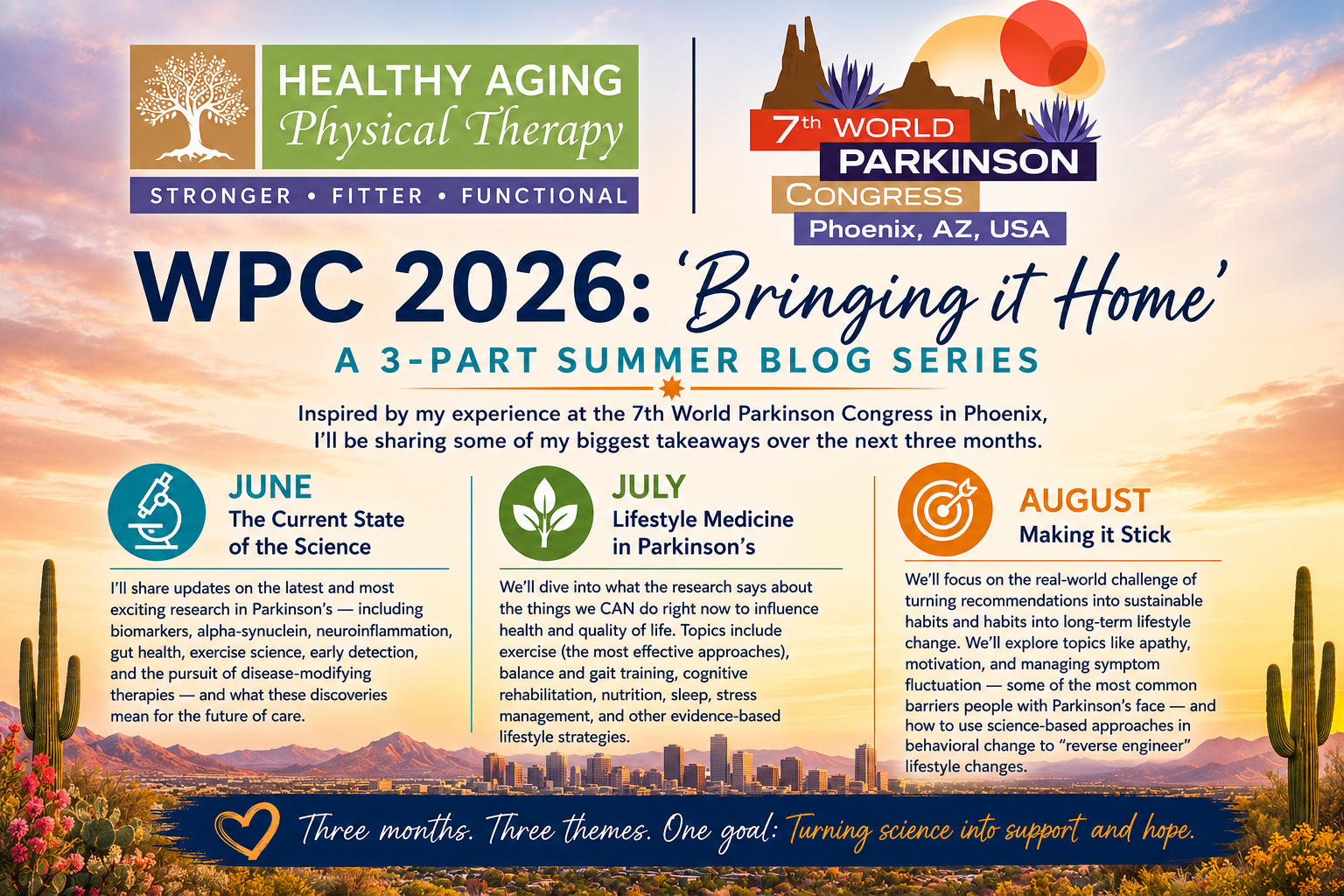
World Parkinson’s Congress 2026: Bringing it Home
World Parkinson’s Congress 2026: Bringing it Home — Healthy Aging At Home Physical Therapy for Seniors
Written by: Dr. Katie Wadland, PT, DPT, Board-Certified Geriatric Clinical Specialist and Owner of Healthy Aging Physical Therapy
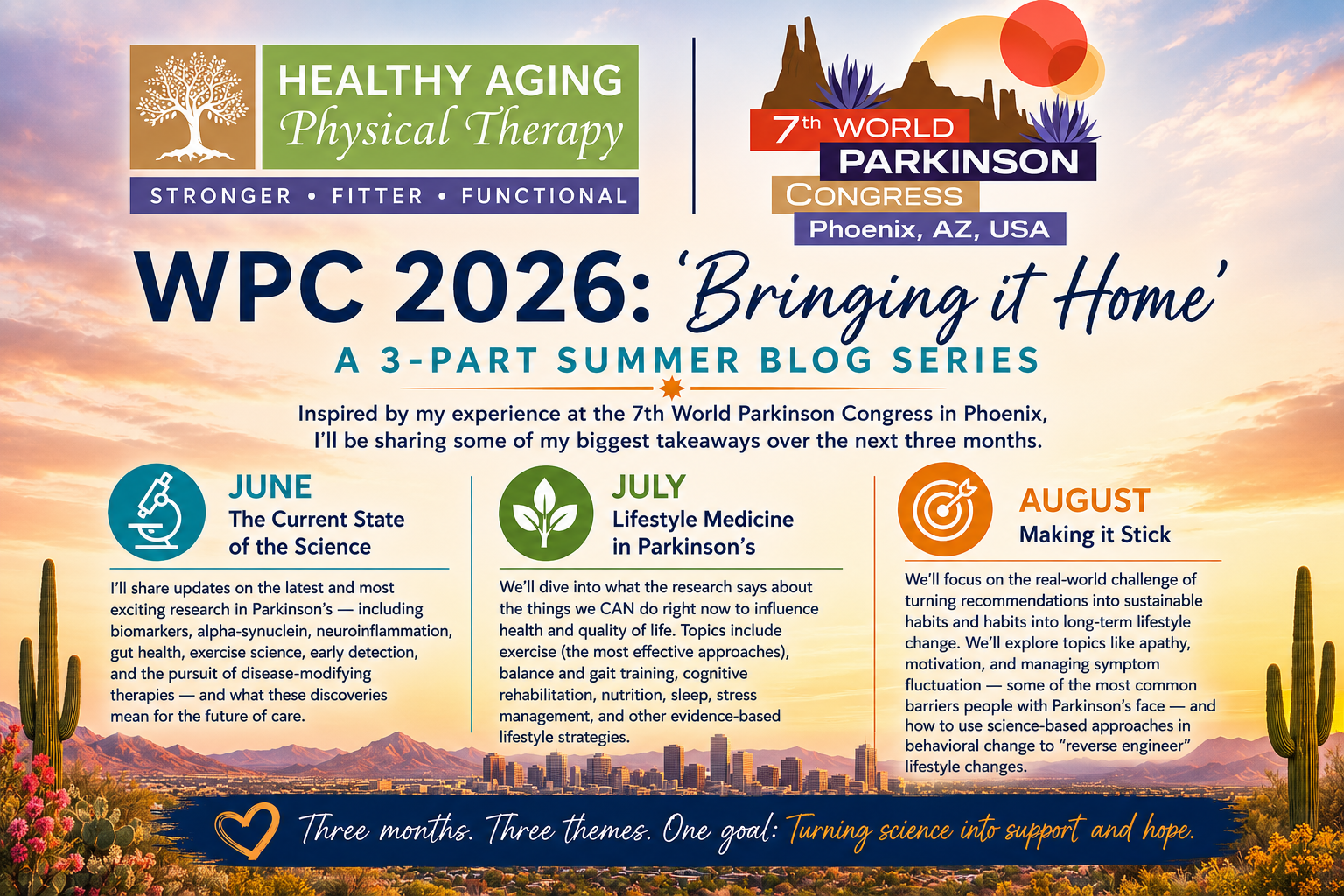
This summer, I’m excited to share a three-part blog series inspired by my experience attending the 7th Annual World Parkinson’s Congress. Over four days surrounded by researchers, clinicians, people living with Parkinson’s, care partners, advocates, and innovators from around the world, I filled pages and pages with notes, ideas, questions, and moments that challenged the way I think about Parkinson’s disease, rehabilitation, exercise, behavior change, and what it truly means to help people live well.
One of the most powerful parts of the conference was realizing how rapidly our understanding of Parkinson’s continues to evolve. The themes repeated throughout the week were impossible to ignore: Parkinson’s is far more complex than simply a ‘dopamine disorder’, exercise remains one of the most powerful disease-modifying tools we currently have, and long-term success depends just as much on behavior, motivation, environment, and support as it does on medications or treatment techniques.
Rather than trying to summarize an entire conference in one overwhelming post, I wanted to slow down, digest the information, and share it in a way that feels meaningful and practical — both for people living with Parkinson’s and for the clinicians and care partners supporting them.
Over the next three months, I’ll be sharing some of my biggest takeaways from the conference:
In June, I’ll be sharing updates on The Current State of the Science of Parkinson’s — breaking down some of the most exciting and rapidly evolving research presented at the conference. We’ll explore topics like biomarkers, alpha-synuclein, neuroinflammation, gut health, exercise science, early detection, and the growing pursuit of disease-modifying treatments — along with what these discoveries may mean for the future of Parkinson’s care.
In July, we’ll shift into Lifestyle Medicine in Parkinson’s — diving into what the evidence says about the things we CAN do right now to influence health, function, and quality of life. I’ll be exploring the research behind exercise, balance and gait training, cognitive rehabilitation, nutrition, sleep, stress management, and other lifestyle strategies that are increasingly recognized as essential components of Parkinson’s management.
And finally, in August, we’ll focus on Making it Stick — the real-world challenge of turning recommendations into sustainable habits and habits into long-term lifestyle change. We’ll explore topics like apathy, motivation, and managing symptom fluctuation — some of the most common barriers people with Parkinson’s face when trying to consistently implement the things we know are helpful — and how science-based approaches to behavior change can help us “reverse engineer” lifestyle changes by creating systems, routines, environments, and supports that make healthy choices more realistic, sustainable, and achievable in everyday life.
My goal with this series is not just to “report back” from a conference, but to help translate complex science into real-world understanding and practical takeaways that can improve care, conversations, and quality of life.
I learned so much at WPC — and now I’m excited to bring it home to you.


From Diagnosis to Late Stage Parkinson’s Disease: How Therapy for Parkinson’s Changes Over Time
Understand the stages of Parkinson’s disease and how therapy goals change over time. Learn how exercise, physical therapy, and proactive care can help you stay active, safe, and independent at every stage.
By: Dr. Katie Wadland, PT, DPT, Board-Certified Geriatric Clinical Specialist and Owner of Healthy Aging Physical Therapy
Parkinson’s disease is a progressive neurological condition that affects movement, balance, coordination, and overall function. While it is considered “progressive,” it’s important to recognize that this progression often occurs gradually—over many years, and in some cases, decades.
At Healthy Aging Physical Therapy, we understand that as the disease evolves, therapy should evolve with it. Our goal is to help our patients with Parkinson’s stay active, healthy, and safe at every stage of their journey.
In this blog, we’ll walk through the different stages of Parkinson’s disease and how therapy goals and approaches change over time to best support those evolving needs.
How Do We Define the Stages of Parkinson’s?
Clinically, Parkinson’s is often categorized using the Hoehn and Yahr Scale, which ranges from mild symptoms on one side of the body to more advanced mobility limitations.
In Stage 1, symptoms are mild and typically affect only one side of the body, often without significant impact on daily function.
In Stage 2, symptoms become more noticeable on both sides of the body, but balance is still largely intact and individuals remain independent.
In Stage 3, balance begins to decline, and fall risk increases, though individuals are usually still able to walk and perform many daily activities independently.
In Stage 4, symptoms are more advanced, and assistance is often needed for mobility and daily tasks.
In Stage 5, individuals may require a wheelchair or significant assistance with mobility and self-care.
But in real life, what matters most isn’t the number - it’s how symptoms are impacting daily movement and function. For that reason, we often think more practically in terms of early, middle, and later stages, with therapy evolving alongside those changes.
Early Stage Parkinson’s: Building the Foundation
In the early stages of Parkinson’s, changes are often subtle. Someone may notice a slight shift in posture, a reduced arm swing on one side, or that movements feel smaller or slower than they used to. Many people are still fully independent and may not feel like they “need” therapy yet.
In reality, there are some incredibly powerful things you can do early on that can help slow the progression of the disease and set you up to live well with Parkinson’s long-term—and therapy plays a key role in that education and guidance.
The focus during this stage is on building a strong foundation through exercise and movement awareness. Establishing a regular walking program is often one of the first steps, and this is something that should become part of your daily routine. Aerobic exercise is especially important, with the goal of gradually building up to 150–300 minutes per week of moderately intense activity. This level of exercise has some of the strongest evidence behind it as an effective way to help slow the progression of symptoms while also supporting overall health.
Strength training is another essential component, ideally performed two to three times per week. While strength training is important for all adults, it becomes even more critical for someone with a neuromuscular condition like Parkinson’s, where maintaining strength is key to preserving function and independence. Working with a physical or occupational therapist can help identify subtle asymmetries or early impairments—such as reduced shoulder mobility, postural changes, or decreased trunk rotation—that may not yet be limiting, but can become more impactful over time if not addressed. The benefit is that these findings can often be seamlessly incorporated into a well-rounded weekly routine that includes strength, mobility, and flexibility work.
This is also the stage when individuals are introduced to amplitude-based exercise programs, such as BIG, LOUD, or PWR! Moves. These programs focus on training larger, more intentional movements and are especially effective in Parkinson’s because they help counteract the tendency toward smaller, slower movement patterns. Starting these programs early—and continuing them consistently over time—can play a major role in maintaining your ability to move well.
At this stage, the overall goal is simple but powerful: use exercise strategically to stay ahead of the disease, rather than reacting to it later.
Middle Stage Parkinson’s: Maintaining Independence and Preventing Falls
As Parkinson’s progresses, changes become more noticeable and begin to impact daily life. Balance may feel less steady, walking may become more effortful, and challenges like freezing of gait—especially during turning or in tight spaces—can start to appear. This is often the stage when individuals first seek therapy after a fall or a noticeable decline.
At this point, the goal shifts from building capacity to maintaining independence and reducing risk.
Exercise remains a critically important part of disease management. Continuing a regular walking program is essential, though some individuals may benefit from introducing an assistive device to improve safety and efficiency. Aerobic exercise is still recommended in the 150–300 minutes per week range, but there is often a shift toward lower-risk options—such as a recumbent bike, elliptical, or NuStep—to allow for safer and more sustainable participation.
Strength training continues to play a key role, but therapy becomes more individualized and problem-focused. A physical or occupational therapist can develop a personalized balance program, address changes in gait, and help with fine motor challenges and difficulties with self-care and daily activities. Therapy at this stage also becomes increasingly focused on teaching you how to work with your body instead of against it. Simple but powerful strategies—like using external cues to improve walking—can make the difference between staying active and gradually reducing activity levels, which is something we work hard to prevent.
This is also the stage where new skills become essential—learning how to safely get up from the floor, how to manage freezing episodes, and how to navigate more complex movement challenges in daily life.
In addition, care often expands to include a broader team. Physical therapy, occupational therapy, and speech therapy may all play a role in addressing Parkinson’s-related changes, from rigidity and dyskinesia to fine motor challenges, voice changes, and swallowing difficulties.
Throughout all of this, amplitude-based programs like PWR! continue to serve as an important anchor, helping reinforce movement quality, confidence, and consistency.
At this stage, therapy becomes more about adapting, problem-solving, and preserving independence for as long as possible.
Later Stage Parkinson’s: Supporting Safety, Comfort, and Quality of Life
In the later stages of Parkinson’s, mobility becomes more limited and individuals often require increased support. Walking may become more difficult or less consistent, and caregivers frequently take on a larger role in daily care.
Even at this stage, therapy remains incredibly valuable—but the focus shifts again.
The goal is no longer just independence, but rather maximizing safety, comfort, and quality of life.
Movement is still encouraged, including walking as able, but often with modifications such as updated assistive devices or the introduction of wheeled mobility to improve safety and reduce fatigue. Aerobic activity remains important, though it is typically adapted to lower-risk formats that allow for continued participation without unnecessary strain.
Strength training continues as well, but often becomes more functional in nature—focusing on tasks like sit-to-stands, bed mobility, and transfers rather than traditional exercise formats.
A significant component of therapy at this stage involves supporting the environment and the caregiving team. This may include home modifications, equipment recommendations, and hands-on caregiver training to ensure safety with mobility and daily tasks.
Therapists also play a key role in minimizing secondary complications, such as contractures, skin breakdown, pain, and aspiration risk, while helping individuals maintain as much comfort and dignity as possible.
Even here, amplitude-based movement strategies can still be incorporated in a modified way to support engagement and movement quality.
At this stage, therapy is deeply focused on support, preservation, and quality of life—for both the individual and their caregivers.
The Common Thread Across Every Stage
While the goals of therapy evolve, a few principles remain constant.
Exercise continues to be one of the most powerful tools we have. Consistency matters. And perhaps most importantly, earlier and ongoing intervention leads to better outcomes.
Too often, therapy is only introduced after a fall or a hospitalization. But Parkinson’s is a lifelong condition—and care should evolve along with it, not stop and start during times of crisis.
